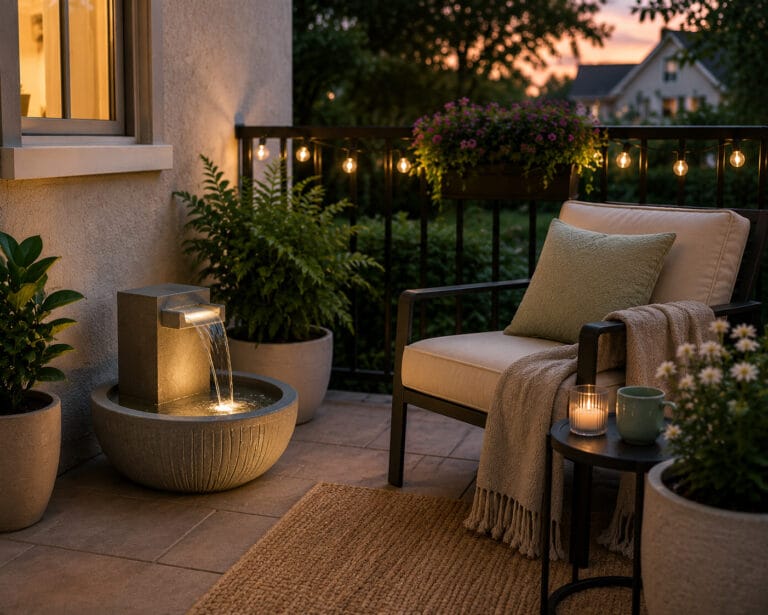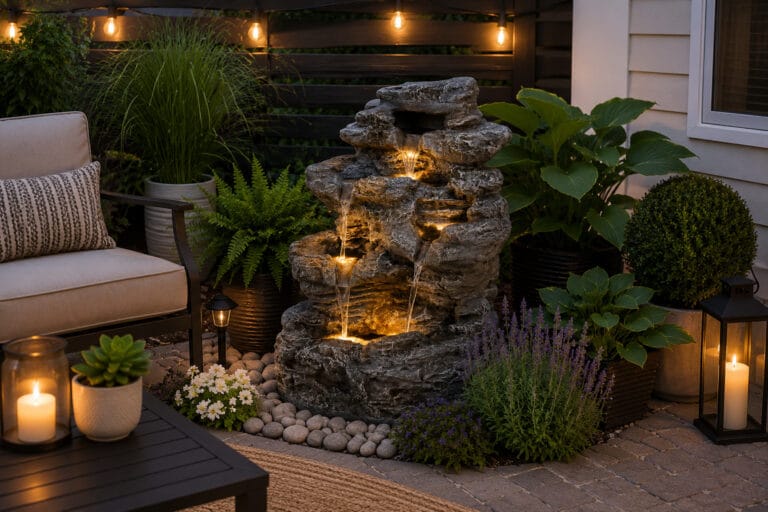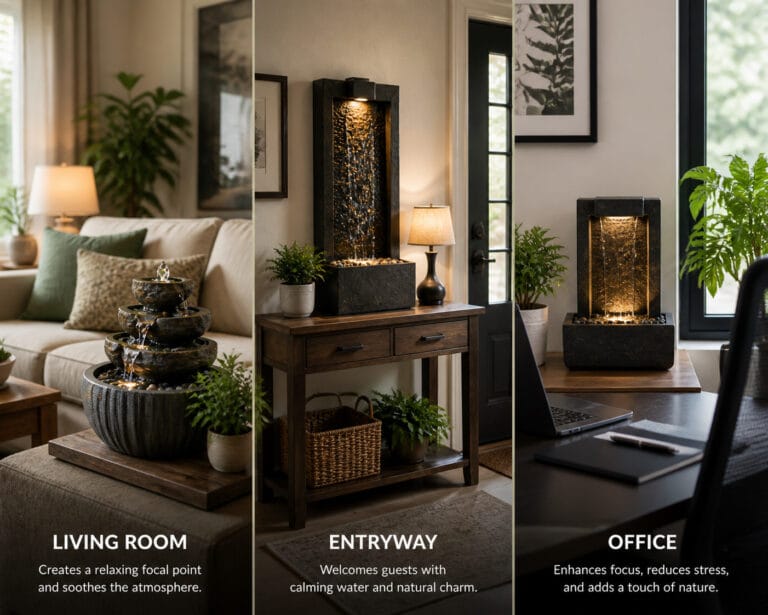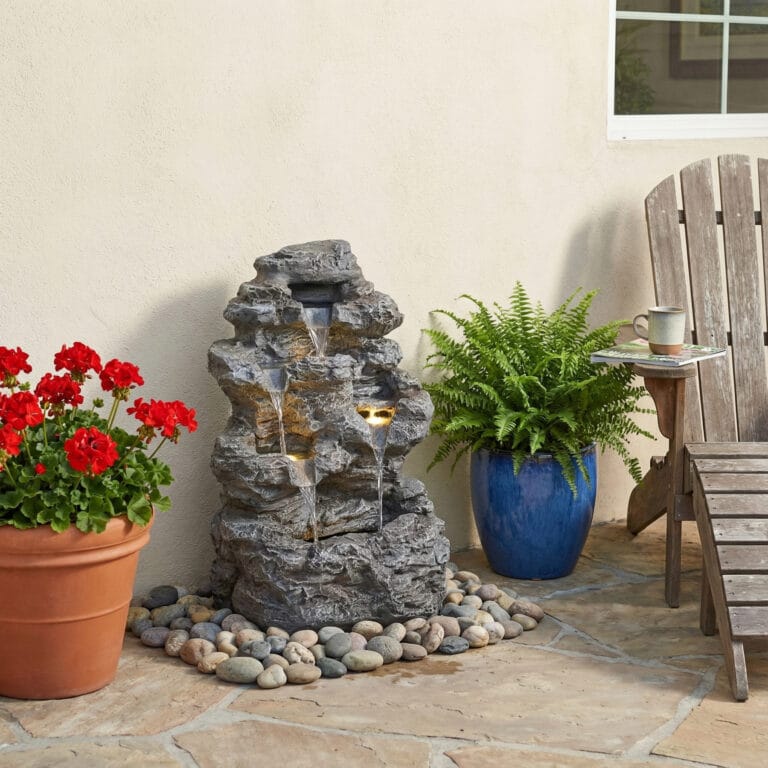
A small fountain not pumping water is one of the most common issues for homeowners using indoor or outdoor water features.
The good news is that in most cases, the pump is not broken.
According to maintenance data from HGTV, The Spruce, Popular Mechanics, and Bob Vila, more than 80–90% of fountain “pump failures” are caused by simple flow issues, not mechanical damage.
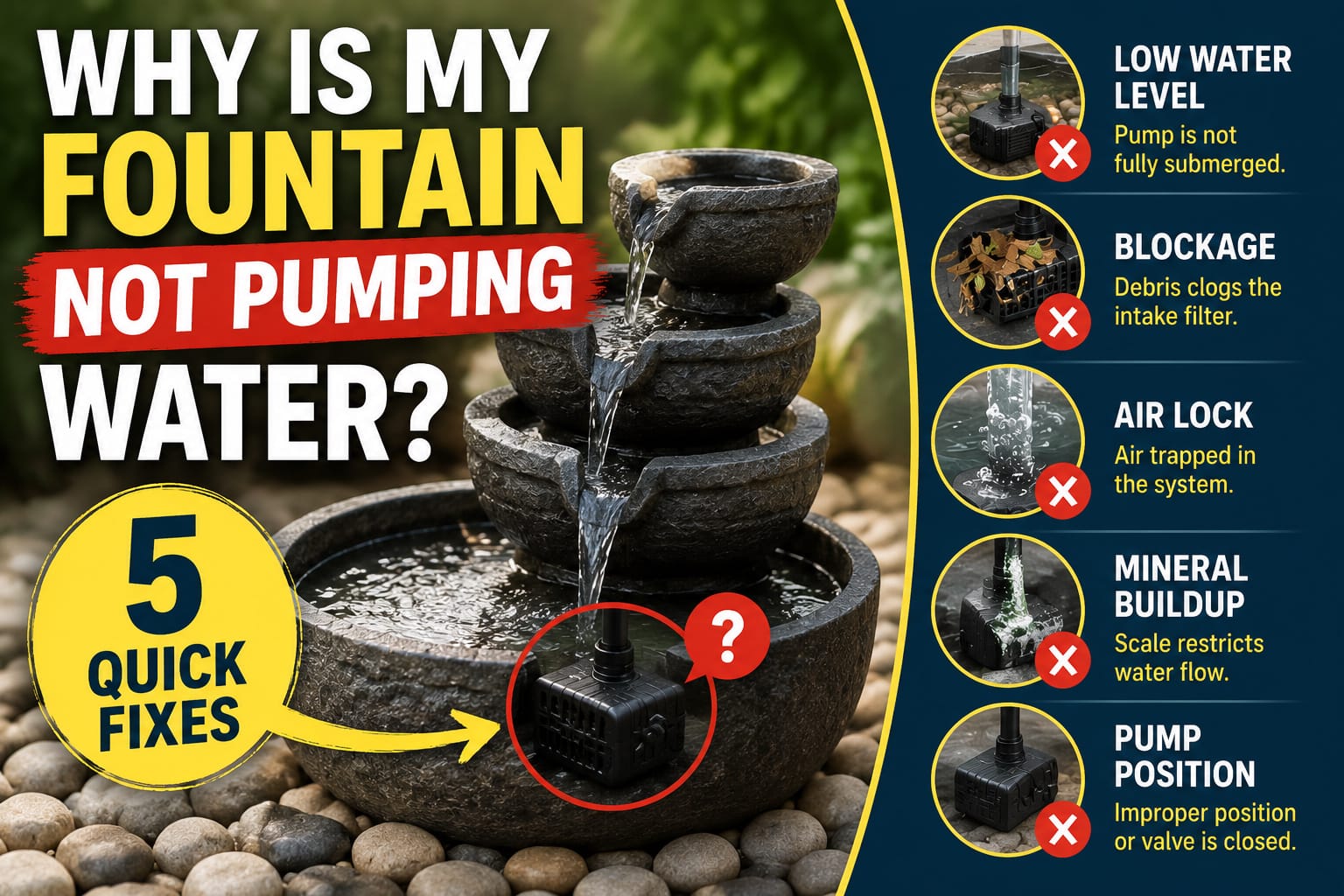
This guide explains 5 quick fixes that solve most problems in under 10 minutes—no tools or replacement parts required.
Table of Contents
🚨 Why Your Small Fountain Is Not Pumping Water
Most 10–30 inch fountains use a submersible recirculating pump system:
Water Basin → Intake Filter → Pump Impeller → Tube → Fountain Outlet → Return Cycle
If any part of this system is blocked or unbalanced, water stops flowing.
📊 Real-World Data: Most “Broken Pumps” Are Not Broken
Based on U.S. residential fountain maintenance reports:
| Issue | Frequency | Severity |
|---|---|---|
| Low water level | 48–60% | Easy fix |
| Intake blockage | 20–30% | Easy fix |
| Air lock | 10–15% | Easy fix |
| Mineral buildup | 5–10% | Moderate |
| Pump misalignment | <5% | Very easy |
👉 Conclusion: Most issues are maintenance-related, not hardware failure.
If you’re still deciding on the right fountain size, it can also impact overall performance and water circulation.
You can explore more details here 👉 How to Choose the Right Size Fountain (10–30 Inch Guide)
Proper sizing helps ensure smoother water flow and reduces unnecessary pump strain.
🛠️ Fix #1: Check Water Level (Most Common Issue)
📉 Symptoms
- Pump runs but no water flow
- Weak bubbling sound
- Pump feels warm
🔬 Why this happens
When water level drops below the pump intake, the pump begins drawing air instead of water, causing dry running (cavitation).
According to HGTV and The Spruce:
- Outdoor fountains can lose 0.2–1 inch of water per day in summer
✅ Solution
- Ensure pump is fully submerged
- Water level should be 1–1.5 inches above pump top
- Refill with clean water
💡 Tip: Use filtered or distilled water in hard-water regions to reduce evaporation residue and buildup.
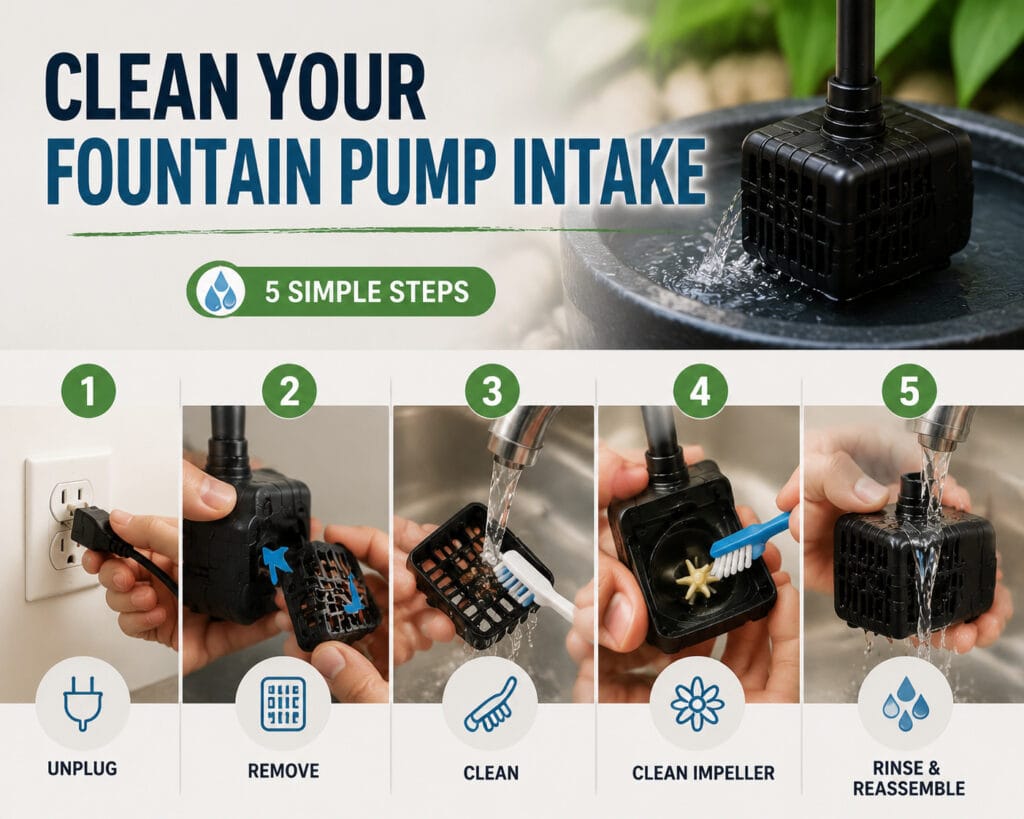
🧼 Fix #2: Clean Pump Intake (Debris Blockage)
📉 Symptoms
- Weak or intermittent water flow
- Nozzle partially working
- Pump louder than normal
🔬 Why this happens
Leaves, dust, algae, and pet hair can block the intake screen, reducing flow by up to 50%+ (Popular Mechanics).
✅ Steps
- Turn off power (GFCI outlet recommended)
- Remove pump from basin
- Clean intake cover with soft brush
- Rinse thoroughly with clean water
💡 Tip: Weekly debris removal prevents 90% of clogging issues in outdoor fountains.
💨 Fix #3: Remove Air Lock (Hidden Issue After Cleaning)
📉 Symptoms
- Pump hums but no water comes out
- Intermittent bubbling
- Happens after refilling or cleaning
🔬 Why this happens
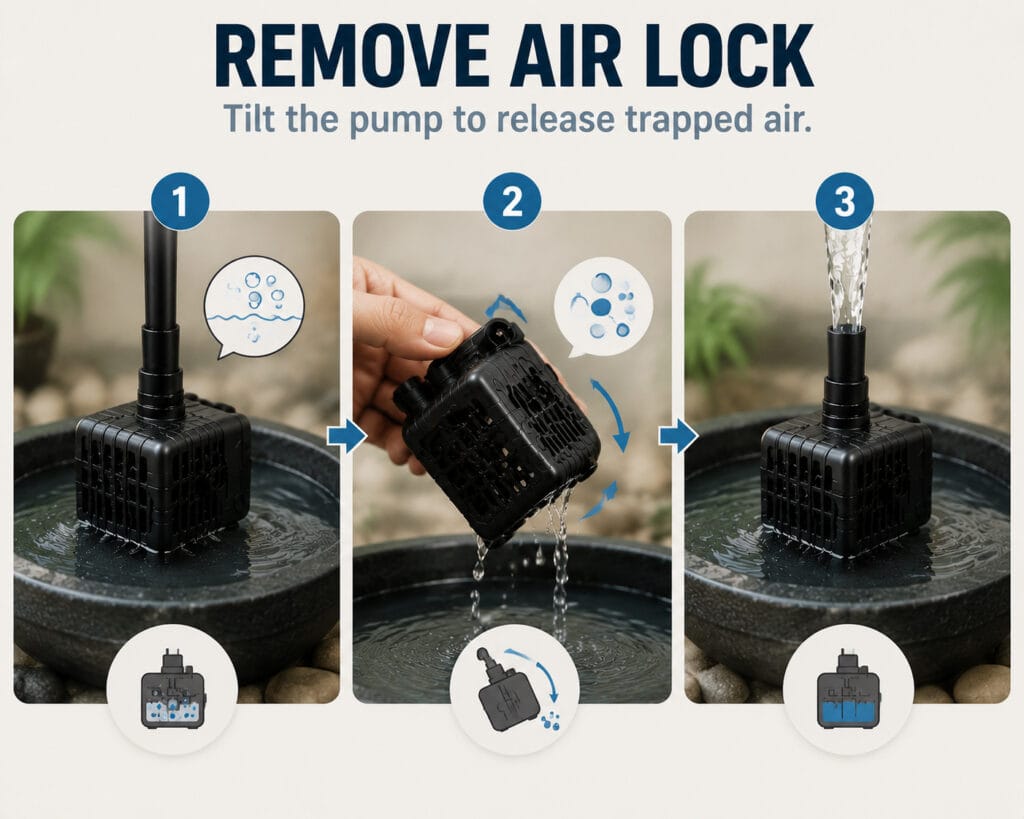
Air gets trapped inside the pump housing or tubing, preventing stable water pressure buildup.
✅ Solution
- Turn off pump
- Tilt pump 15–30° underwater
- Gently shake to release trapped air
- Restart system
💡 Tip: Pour water slowly along basin wall during refill to reduce air bubbles.
🪨 Fix #4: Remove Mineral Buildup (Hard Water Issue)
📉 Symptoms
- White crust on pump or nozzle
- Weak or uneven water flow
- Gradual performance decline
🔬 Why this happens
USGS data shows many U.S. regions (Southwest, Midwest) have hard water (>120 ppm CaCO₃).
Calcium and magnesium deposits form inside pump impellers and restrict flow.
✅ Solution (The Spruce method)
- Mix 1:1 white vinegar + water
- Soak pump for 15–20 minutes
- Clean with soft brush
- Rinse thoroughly
⚠️ Do not use metal tools or abrasives.
💡 Long-term fix: Use filtered water or schedule monthly vinegar cleaning in hard water regions.
⚙️ Fix #5: Check Pump Position & Flow Control Valve
📉 Symptoms
- No water or extremely weak flow
- Water spraying unevenly
- Pump moved after cleaning
🔬 Why this happens
Incorrect positioning or a closed flow valve blocks circulation.
✅ Steps
- Ensure pump is flat on basin bottom
- Remove any tube bends or kinks
- Slowly open flow control valve
- Adjust until water flow stabilizes
💡 Tip: Do not set flow to maximum immediately—it can trigger air lock.
If your fountain is placed indoors, proper placement and airflow can also affect pump performance. You may want to see our guide on
👉 Indoor Fountain Placement Ideas (Living Room, Entryway & Office)
This helps ensure stable water flow and reduces dust-related issues.
🚨 When the Pump Is Actually Broken
If all fixes fail, the pump may be reaching end-of-life.
Warning signs:
- No vibration or sound
- Burnt smell
- Visible corrosion or damage
- Works intermittently even after cleaning
📊 Average lifespan:
- Standard submersible pump: 1–3 years
- Hard water regions: often closer to 12–18 months
Replacement pumps are typically $15–$40 (Home Depot range).
🧠 How to Prevent This Problem
- Clean pump every 2–4 weeks
- Maintain water level above intake
- Use filtered or distilled water when possible
- Remove debris weekly (especially outdoor fountains)
- Avoid dry running at all costs
Outdoor placement also plays a big role in how often your fountain collects debris and requires cleaning. In small yards or patios, thoughtful positioning can make a noticeable difference in maintenance.
You can see practical layout ideas here 👉 Small Backyard Fountain Ideas for Compact Spaces
Good placement not only improves appearance but also helps keep the pump running more smoothly over time.
📋 Quick Troubleshooting Checklist
- Water level above pump (≥1 inch)
- Intake screen clean
- No air trapped in system
- No mineral buildup
- Pump flat and stable
- Flow valve open
💡 Final Thoughts
In most cases, a small fountain not pumping water is caused by simple maintenance issues—not equipment failure.
A quick 5–10 minute check is usually enough to restore full water flow.
Consistent cleaning and proper placement are the key to long-lasting, quiet, and stable fountain performance.