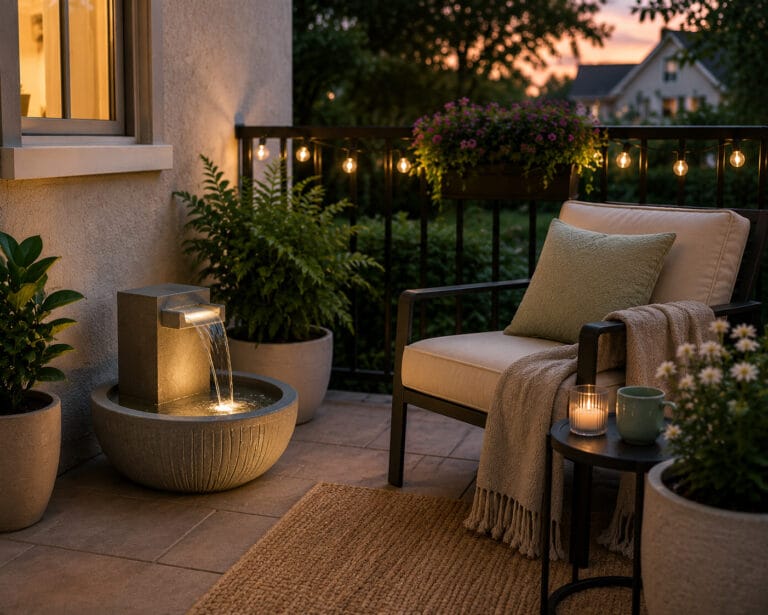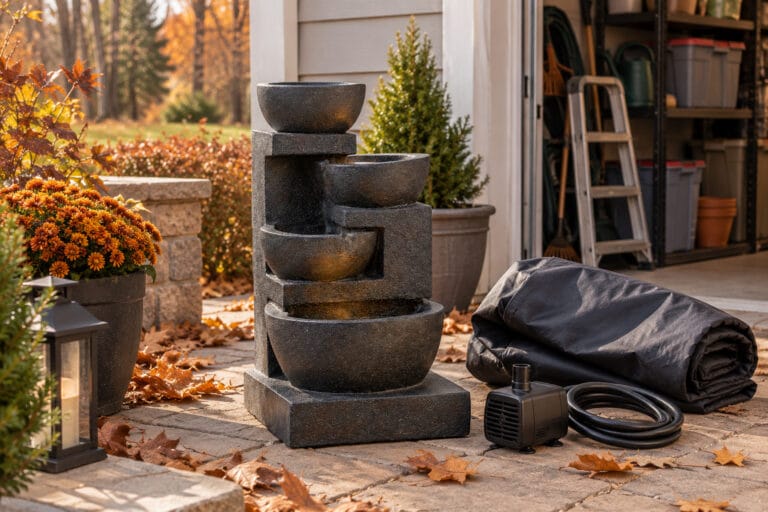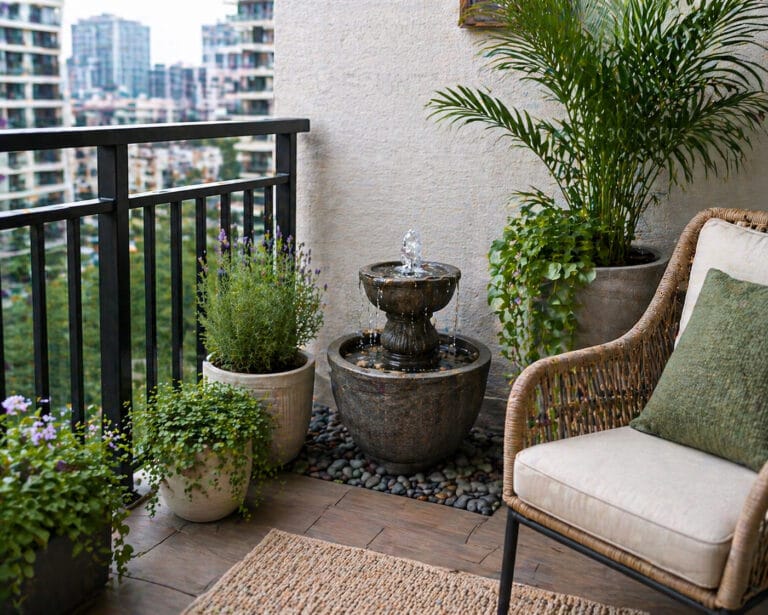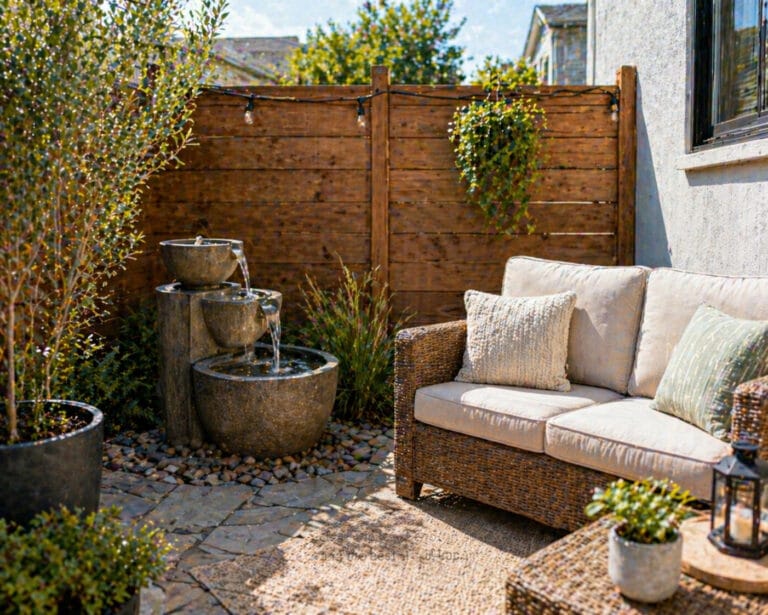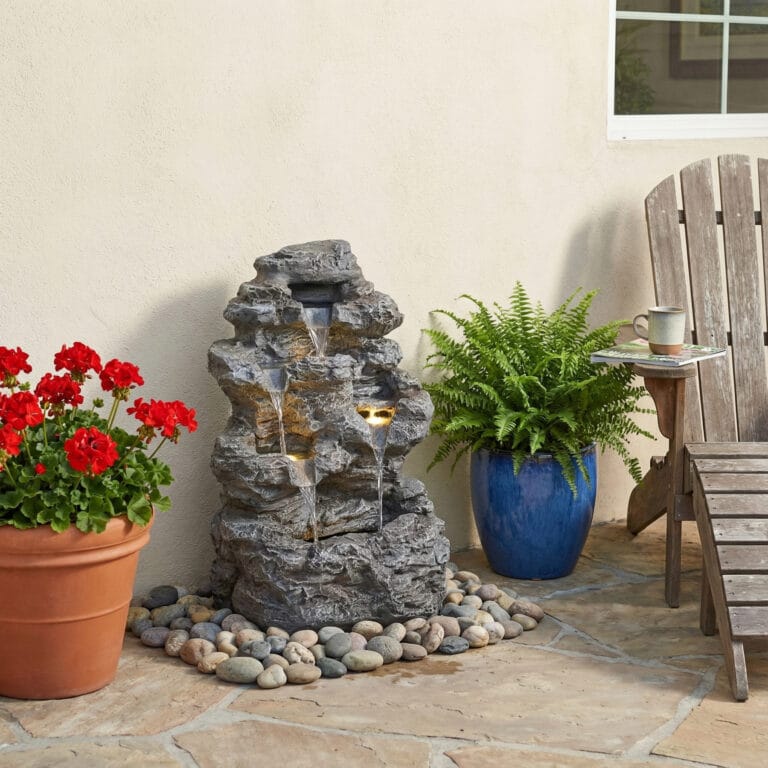
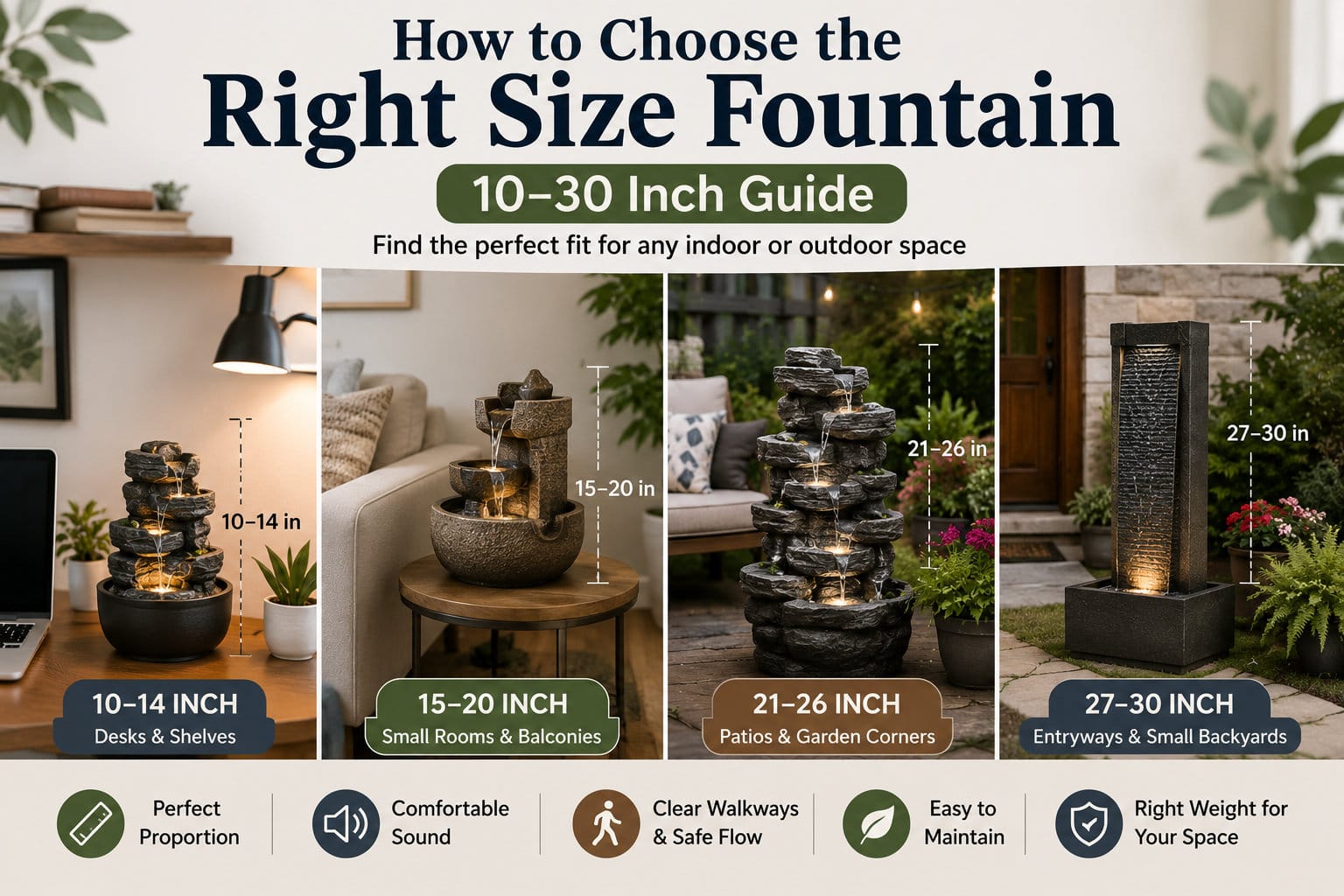
Choosing the right fountain size is just as important as choosing the style itself. A fountain that is too small can disappear visually, while one that is too large may overwhelm a patio, balcony, living room, entryway, or small backyard.
For many compact indoor and outdoor spaces, a 10–30 inch fountain offers the best balance of visual presence, relaxing water sound, manageable weight, and everyday practicality. This size range works especially well for apartments, covered patios, small gardens, home offices, and modern American living spaces where floor space is limited.
This guide explains how to choose the right fountain size based on room size, furniture scale, sound level, placement, material weight, and common sizing mistakes — helping you find a fountain that feels balanced, intentional, and comfortable in your space.
Table of Contents
Why the Right Fountain Size Matters
The right fountain size should feel intentional without overwhelming the space. It should add movement and sound while still leaving room for walking, seating, cleaning, and daily use.
| What Size Affects | Right Size | Wrong Size |
|---|---|---|
| Visual balance | Feels natural and decorative | Too small feels unnoticed; too large feels crowded |
| Water sound | Gentle, relaxing background sound | Too quiet or too loud for the space |
| Safety & movement | Keeps walkways clear | Blocks doors, seating, or walking paths |
| Maintenance | Easy to refill and clean | Hard to reach, move, or service |
| Weight | Safe for tables, floors, patios, and balconies | Too heavy for shelves, tabletops, or balcony areas |
As a practical rule, keep a compact fountain visually proportional to nearby furniture and leave enough clearance for walking and maintenance. For most small spaces, 10–30 inches is the most flexible size range.
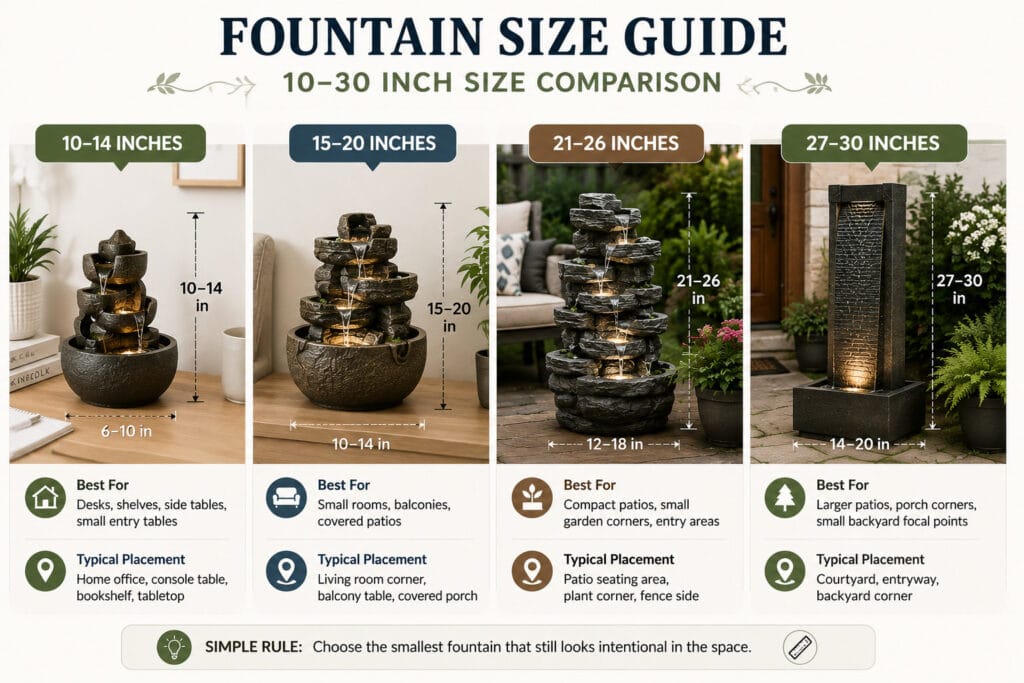
Quick Fountain Size Guide
| Fountain Height | Best For | Typical Placement |
|---|---|---|
| 10–14 inches | Desks, shelves, side tables, small entry tables | Home office, console table, bookshelf, tabletop |
| 15–20 inches | Small rooms, balconies, covered patios | Living room corner, balcony table, covered porch |
| 21–26 inches | Compact patios, small garden corners, entry areas | Patio seating area, plant corner, fence side |
| 27–30 inches | Larger patios, porch corners, small backyard focal points | Courtyard, entryway, backyard corner |
Simple rule: choose the smallest fountain that still looks intentional in the space.
How to Choose the Right Fountain Size by Space
Small Apartments & Compact Indoor Rooms
For apartments, studios, small living rooms, and shared indoor spaces, smaller fountains usually work best.
Recommended size: 10–18 inches
Good placements include:
- Console tables
- Side tables
- Bookshelves
- Office desks
- Empty corners with a small stand
A 10–14 inch tabletop fountain works well when you want a soft water sound without taking over the room. A 15–18 inch fountain can work better if the room has a larger corner or a wider console table.
For more indoor layout ideas, see our guide to indoor fountain placement ideas.
Living Rooms
Living rooms can usually handle a slightly larger fountain, especially if there is open space near seating or an unused corner.
Recommended size: 16–24 inches
Best placements:
- Beside an accent chair
- Near a reading corner
- Along an empty wall
- In a quiet corner away from the main walkway
Avoid placing a fountain too close to the TV, speakers, or electronics. Even gentle water sound can become distracting if it competes with media or conversation.
Home Offices
For home offices, sound control matters more than visual impact. A smaller, quieter fountain is usually the safest choice.
Recommended size: 10–16 inches
Look for:
- Gentle trickling sound
- Small footprint
- Minimal splash
- Easy refill access
- Simple pump design
A small tabletop fountain can soften the room without interrupting calls, reading, or focused work.
Balconies & Small Patios
Balconies and small patios need careful sizing because walking space is limited. The fountain should add atmosphere without making the area hard to use.
Recommended size: 15–24 inches
Good options include:
- Slim vertical fountains
- Compact pedestal fountains
- Small rock waterfall fountains
- Tiered tabletop fountains on outdoor side tables
Try to keep at least 24 inches of clearance around walkways and seating. For narrow apartment balconies, choose lightweight resin or polyresin instead of heavy stone or concrete.
For more balcony-specific ideas, see balcony water fountain ideas for apartments.
Small Backyards
A small backyard can usually handle a more noticeable fountain, especially when it is placed near a garden corner, fence, or seating area.
Recommended size: 20–30 inches
Best placements:
- Garden corner
- Near patio seating
- Along a fence
- Beside planters
- Visible from a window or back door
For compact backyards, the goal is to create a focal point without crowding the usable area. A 24–30 inch fountain can work well if the walking path remains clear.
For more backyard layout ideas, see small backyard fountain ideas.
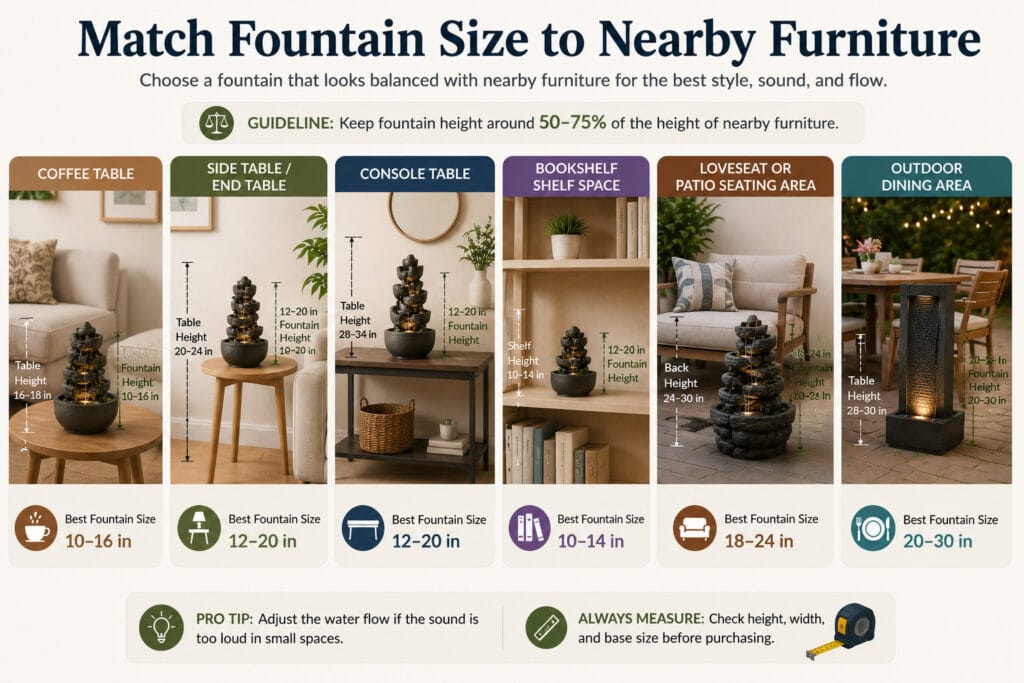
Match Fountain Size to Nearby Furniture
A fountain should feel proportional to the furniture around it. This is especially important indoors, where a fountain that is too tall can feel visually heavy.
| Nearby Furniture | Common Furniture Height | Recommended Fountain Size |
|---|---|---|
| Coffee table | 16–18 in | 10–16 in |
| Side table / end table | 20–24 in | 12–20 in |
| Console table | 28–34 in | 12–20 in |
| Bookshelf shelf space | 10–14 in per shelf | 10–14 in |
| Loveseat or patio seating area | Back height often 24–30 in | 18–24 in |
| Outdoor dining area | Table height often 28–30 in | 20–30 in |
A useful guideline is to keep the fountain around 50–75% of the height of the nearby furniture, unless you intentionally want it to be a focal point.
Fountain Size and Sound Level
Fountain sound depends on water flow, pump strength, drop height, and material. Still, size gives a general idea of what to expect.
| Fountain Size | Typical Sound Feel | Best For |
|---|---|---|
| 10–14 in | Very soft trickle | Office, bedroom, shelf, desk |
| 15–20 in | Gentle flowing sound | Living room, entryway, balcony |
| 21–26 in | More noticeable cascading sound | Patio, small garden, open living area |
| 27–30 in | Stronger water presence | Porch, courtyard, small backyard |
For indoor spaces, choose a smaller fountain or one with an adjustable pump. For outdoor spaces where you want to mask light neighborhood or street noise, a 21–30 inch fountain may feel more effective.
Material, Weight, and Base Size
Do not choose a fountain by height alone. Always check:
- Height
- Width
- Depth
- Base size
- Dry weight
- Water capacity
- Power cord length
| Material | Best Size Range | Typical Use | Notes |
|---|---|---|---|
| Resin / Polyresin | 10–30 in | Indoor, balcony, patio, small backyard | Lightweight, easy to move, practical for compact spaces |
| Ceramic | 10–18 in | Indoor tables, entryways, covered areas | Stylish but more fragile |
| Metal | 15–26 in | Modern indoor or covered outdoor spaces | Needs floor protection and occasional care |
| Cast stone / concrete | 24–30 in | Outdoor patios, porches, garden corners | Heavy and stable, but not ideal for balconies |
| Natural stone | 24–30 in | Permanent outdoor focal points | Very heavy and harder to move |
For balconies, apartments, and upstairs spaces, lightweight resin or polyresin is usually the safest and easiest choice.
Common Fountain Sizing Mistakes
1. Choosing Too Small
A 10–12 inch fountain may look good online, but it can feel too small on a large patio or open backyard corner. Before buying, measure the real space and imagine the fountain at actual height.
2. Choosing Too Large
A 30 inch fountain can be beautiful, but it may overwhelm a narrow balcony or small indoor corner. Larger fountains need more clearance and stronger visual balance.
3. Forgetting Walking Clearance
Leave at least 24 inches of walking or cleaning space when possible. For larger 27–30 inch fountains, more clearance is better.
4. Only Checking Height
Height is not enough. A fountain that is 20 inches tall may still have a wide base that does not fit your shelf, console table, balcony corner, or patio layout.
5. Ignoring Power Access
Most fountains need a nearby outlet. Check the outlet location before deciding where the fountain will go. For outdoor spaces, use appropriate outdoor-rated electrical setup and avoid unsafe extension cord layouts.
6. Choosing the Wrong Material for the Location
Heavy concrete or stone fountains are better for ground-level patios and gardens. For balconies, apartments, and indoor furniture, lighter resin or ceramic styles are usually more practical.
Final Fountain Size Checklist
Before choosing a 10–30 inch fountain, ask:
- Is the fountain height suitable for the room, patio, or balcony?
- Does the base fit the table, shelf, corner, or floor area?
- Is there at least 24 inches of clearance around the main walking path?
- Is the water sound appropriate for the space?
- Is the material weight safe for the placement area?
- Is there a nearby power outlet?
- Can you easily refill, clean, and move the fountain if needed?
Final Thoughts
The right fountain size is not about choosing the biggest design. It is about choosing the size that fits your space, furniture, sound preference, and daily routine.
For desks, shelves, and home offices, 10–16 inches is usually best. For living rooms, balconies, and covered patios, 15–24 inches offers the safest balance. For patios, entryways, and small backyard corners, 24–30 inches can create a stronger focal point when there is enough clearance.
A well-sized fountain should feel calm, balanced, and easy to live with — not oversized, awkward, or hard to maintain.