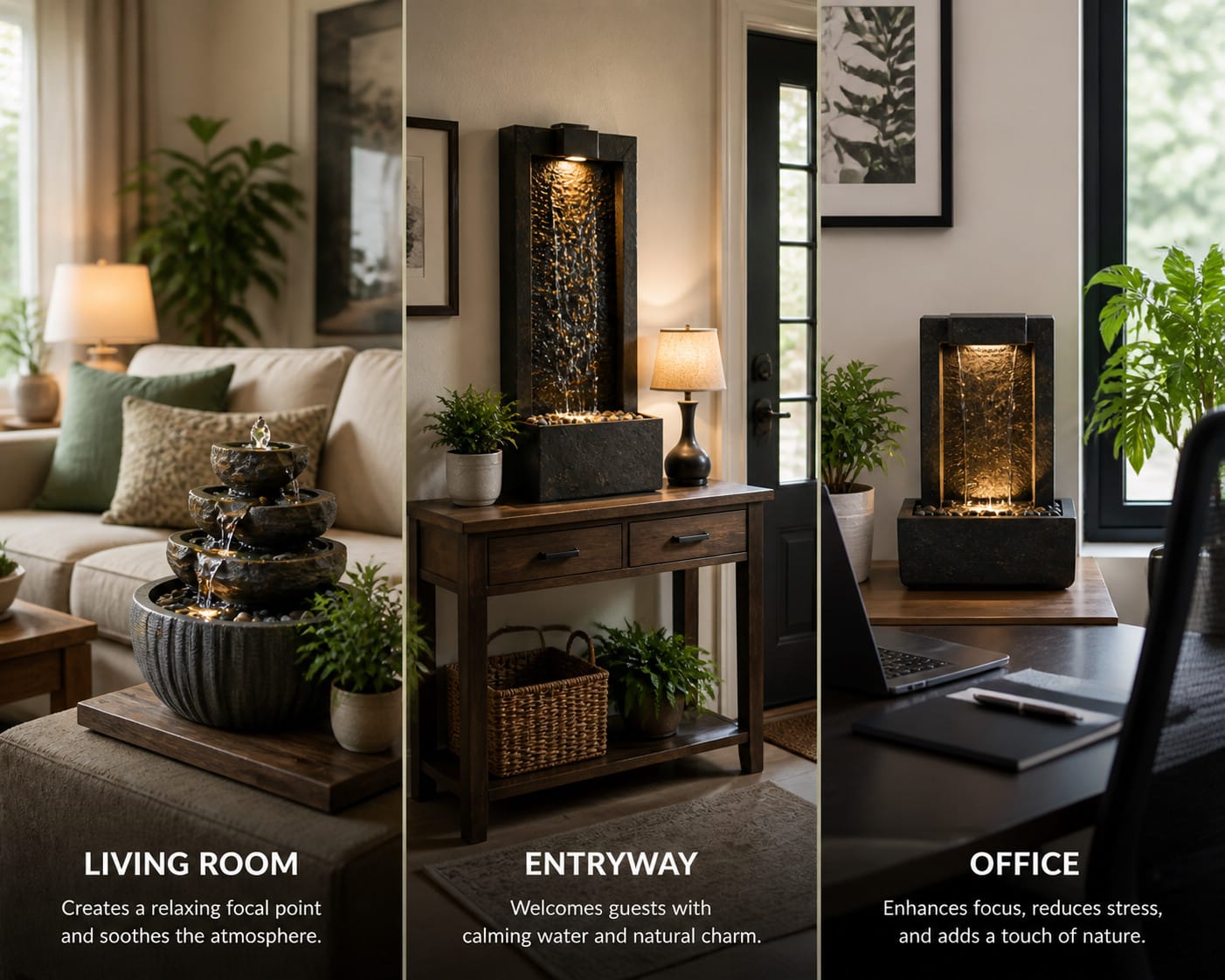
Indoor fountains are more than decorative pieces—they bring movement, soothing water sounds, and subtle humidity adjustments to your home or office. They can enhance focus, reduce stress, and create a calm environment for residents or employees.
This guide provides practical ideas for placing indoor fountains in living rooms, entryways, and offices, combining professional insights, American user feedback, and industry standards. You’ll learn about fountain types, sizes, materials, placement, noise control, and maintenance to create a functional and visually appealing space.
Table of Contents
Why Place an Indoor Fountain?
| Benefit | Professional Insight | Evidence / Case Study |
|---|---|---|
| Acoustic Masking | 30–40 dB water sound masks HVAC and street noise | Journal of Environmental Psychology: indoor white noise reduces stress by 19–27% and improves focus by 14% |
| Microclimate Control | Small indoor fountains increase local humidity 2–4% | EPA recommends 30–50% indoor humidity; helpful in dry winter climates like Colorado or Arizona |
| Biophilic Design | Flowing water + soft light enhances “connection to nature” | Terrapin Bright Green: indoor water features reduce cortisol by 16%, improving comfort |
| Low Maintenance | Closed-loop systems, plug-and-play | 73% of U.S. HOA allow UL-certified plug-in indoor fountains |
Designers agree: Value lies in proportional sound, visual line, and integration with the environment. Place fountains along peripheral vision zones and primary pathways for presence without interference (ASID guidelines).
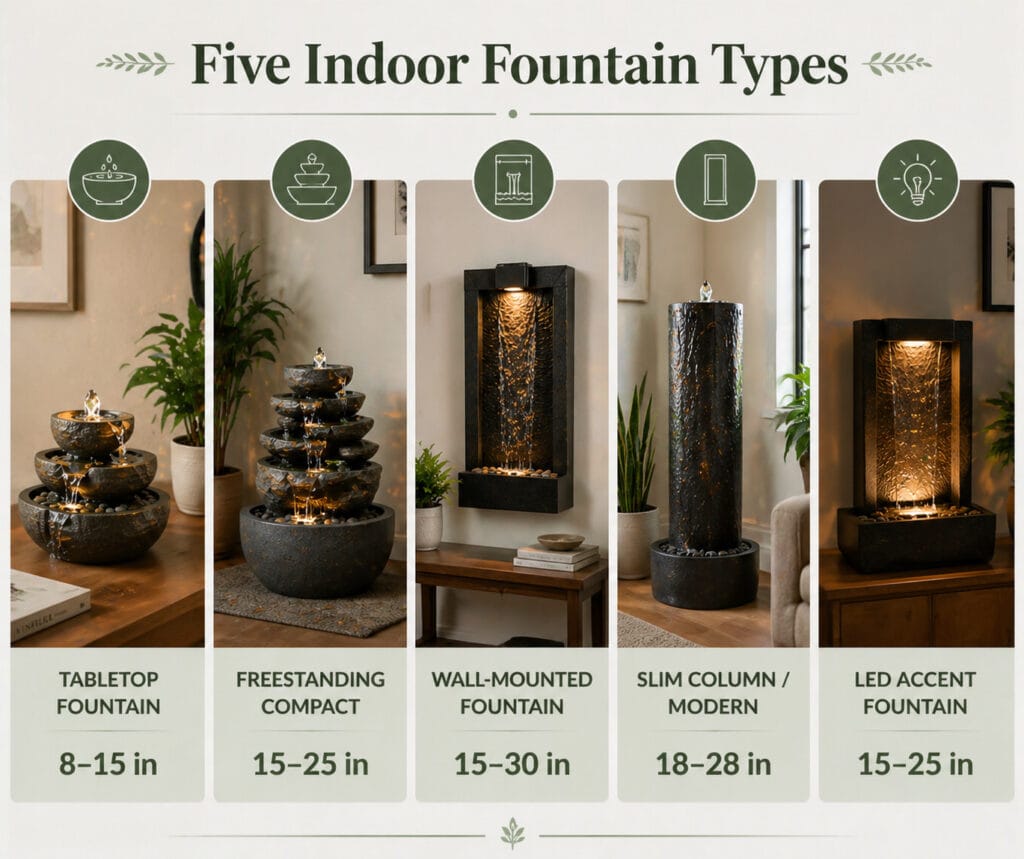
Indoor Fountain Types & Sizes
| Type | Typical Height | Best For | Key Parameters |
|---|---|---|---|
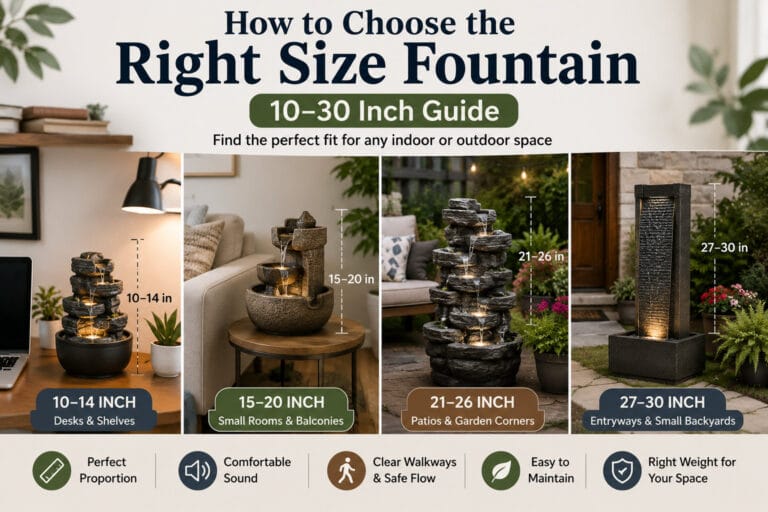
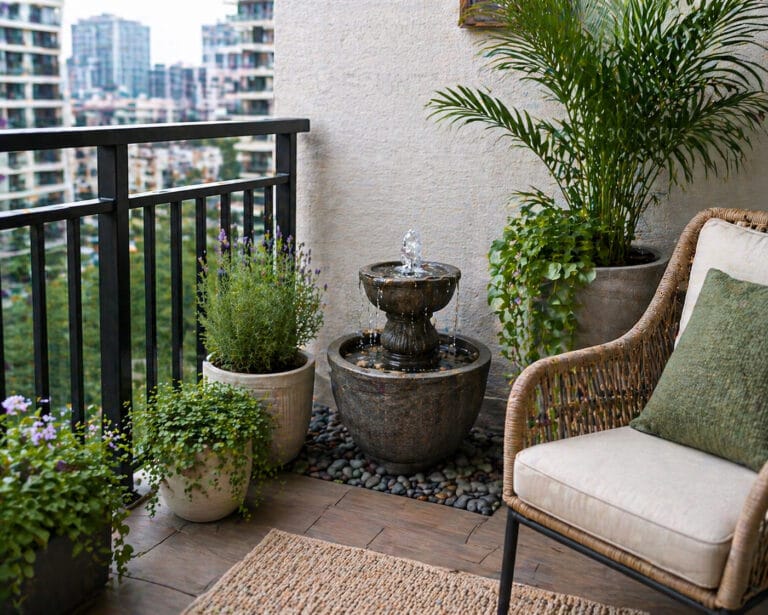
| Tabletop Fountain | 8–15 in | Side tables, shelves, small corners | ≤0.8 gal water, pump 20–40 GPH, non-slip base |
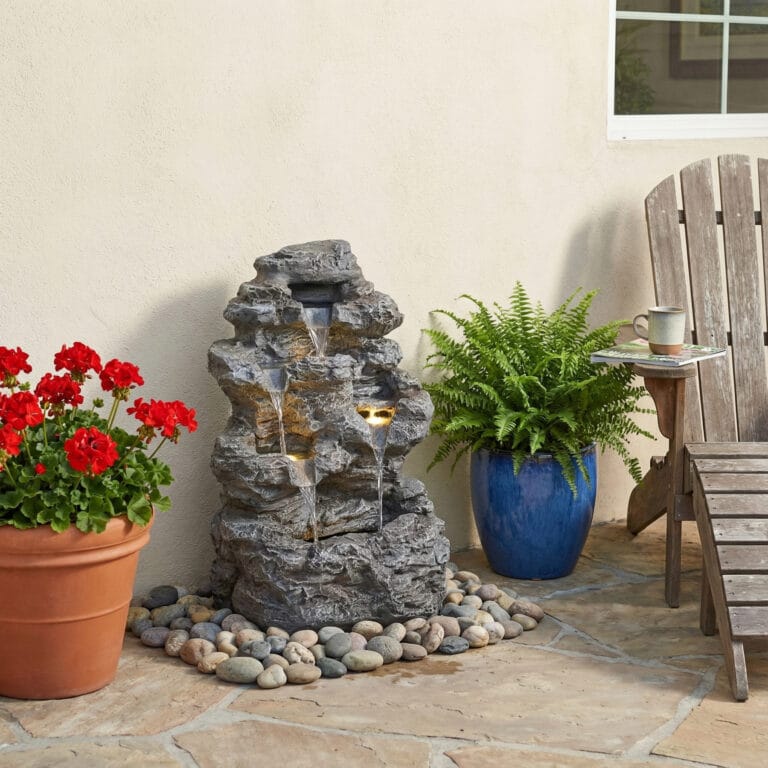
| Freestanding Compact | 15–25 in | Living room corners, reading nooks | Visual anchor, resin or stone-look, sound radius 6–8 ft |
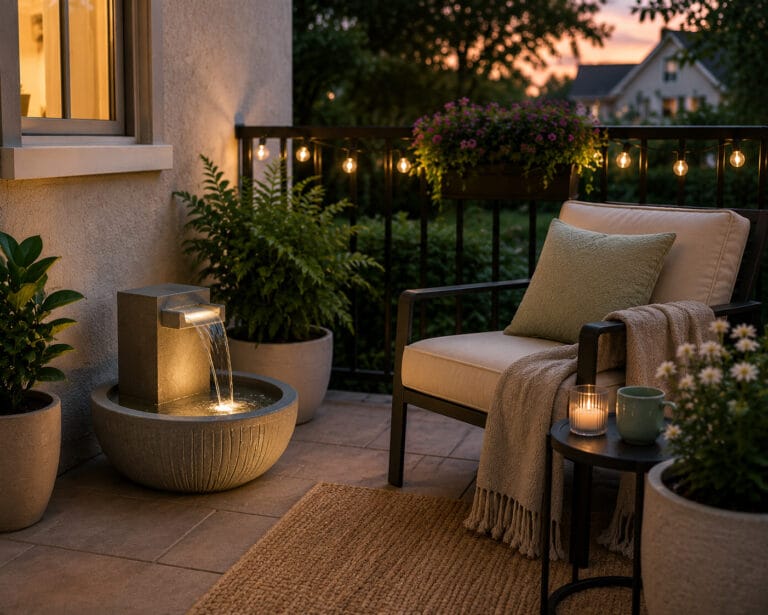
| Wall-Mounted | 15–30 in | Narrow hallways, entryway walls, office backgrounds | ≤4 in thickness, 2 in rear ventilation, adhesive installation |
| Slim Column / Modern | 18–28 in | Open offices, modern living rooms | 4–6 in cross-section, thin sheet or spout water flow, anti-splash guide |
| LED Accent | 15–25 in | Evening reading, reception desks, entry focal points | Warm 2700–3000K, IP44+ waterproof, independent low-voltage transformer |
Tip: For most indoor spaces, choose the smallest fountain that feels visually intentional.
Placement Guidelines by Space
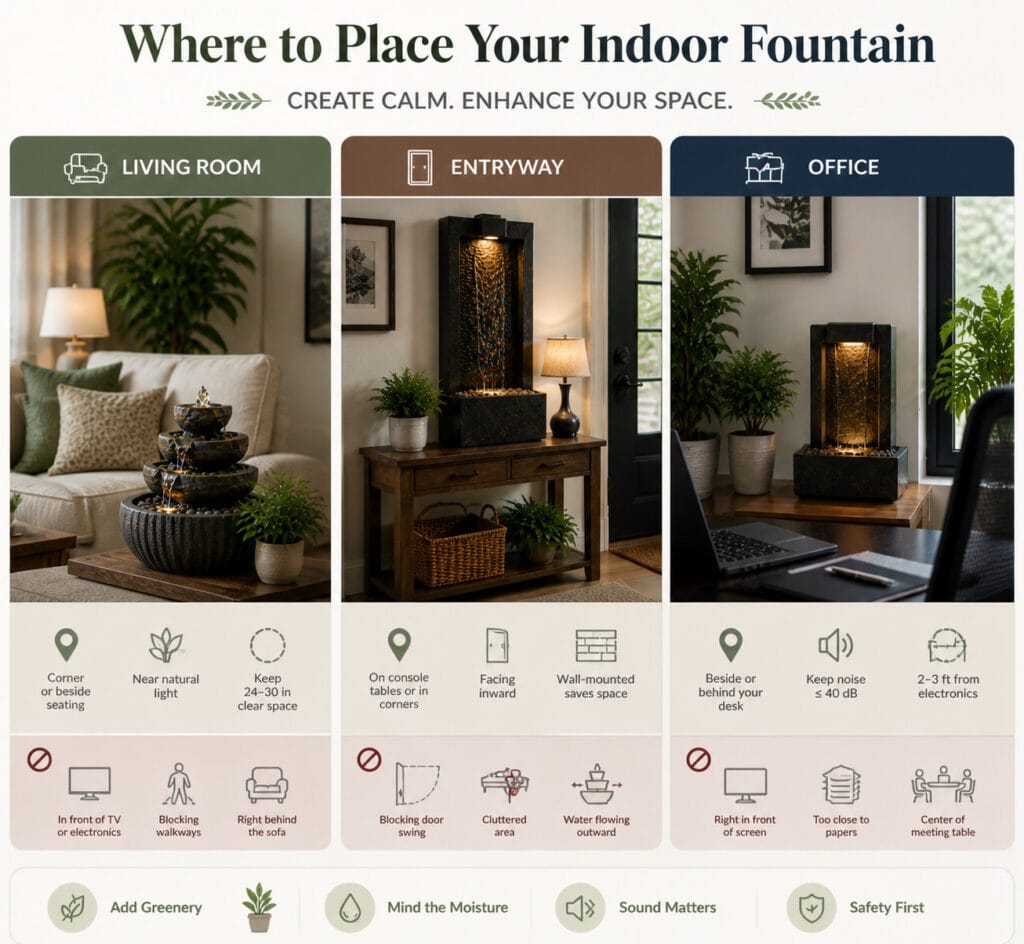
Living Room
- Side of sofa, coffee table, or console table
- Maintain ≥24-inch clearance around fountain
- Pair with mid-height indoor plants (e.g., snake plant, ZZ plant, peace lily)
- Use carpet or rug to soften reflections and water sound
Entryway / Foyer
- Place on console table or in corner as first impression focal point
- Narrow entryways (<36 in width) favor wall-mounted or slim column fountains
- Keep doorways unobstructed
- Tip: Combine with warm wall lighting or mirrors to extend visual depth
Office / Home Office
- Desk side, reception area, or lounge corner
- Maintain ≥2–3 ft from electronics
- Noise ≤40 dB for minimal distraction
- Use flow-control pump for adjustable sound
Materials & Weight
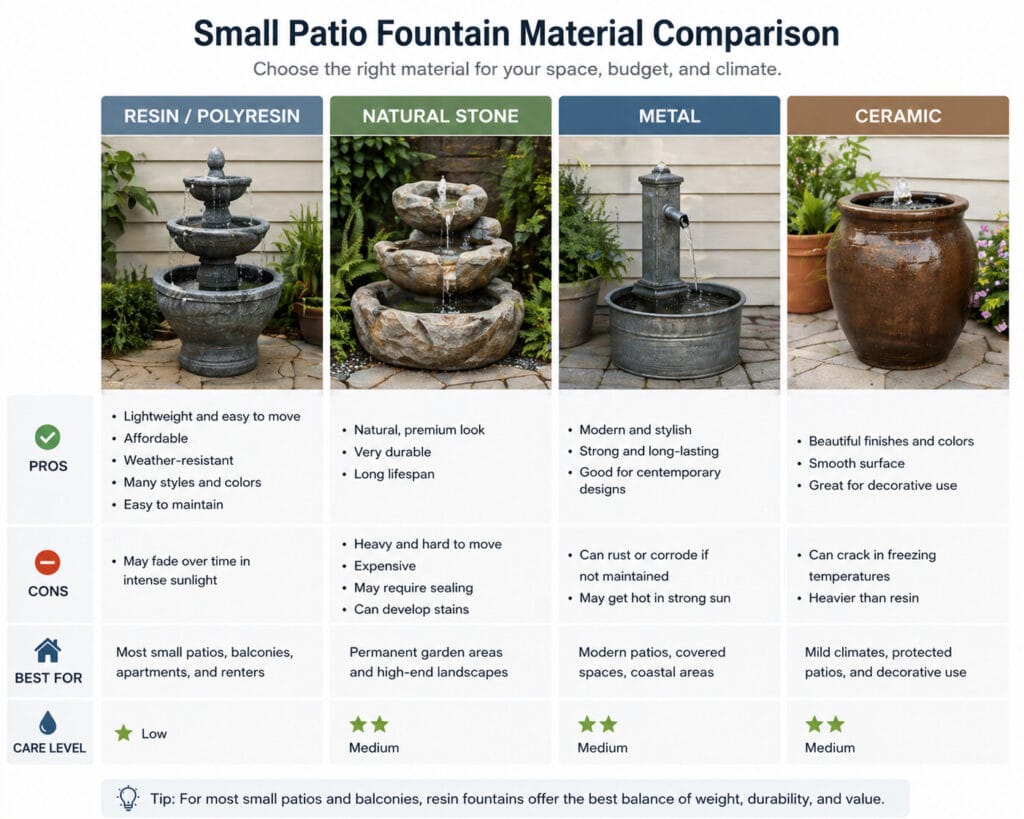
| Material | Suitability | Notes |
|---|---|---|
| Resin / Polyresin | Excellent | Lightweight (5–15 lbs), durable, safe indoors |
| Ceramic | Good | Stylish, moderate weight (8–20 lbs), fragile, use padding |
| Metal (Copper / Aluminum) | Moderate | Elegant, heavier (10–25 lbs), use protective mat |
| Natural Stone | Limited | Very heavy (20–40+ lbs), best for large foyers only |
Noise & Care
- Single-tier / bowl fountains: 30–35 dB
- Multi-tier / waterfall fountains: 35–40 dB
- Maintenance:
- Weekly: refill water
- Monthly: clean pump filter
- Avoid placing near electronics
Common Mistakes
- Blocking pathways or doors
- Using heavy fountains without floor protection
- Placing too close to electronics (<2 ft)
- Ignoring water pump maintenance
- Oversized fountain in small rooms
Final Thoughts
Indoor fountains bring calm, aesthetic appeal, and improved indoor environment to living rooms, entryways, and offices. Choose fountains 8–30 in, consider placement, material, and sound level, and integrate with your décor. A thoughtfully placed indoor fountain transforms ordinary spaces into serene, functional, and visually pleasing environments.