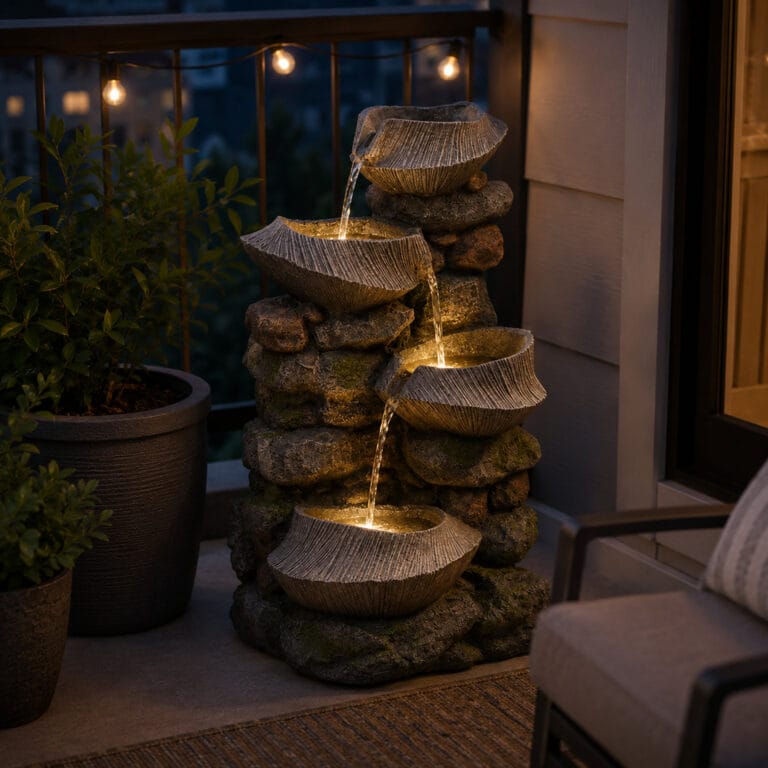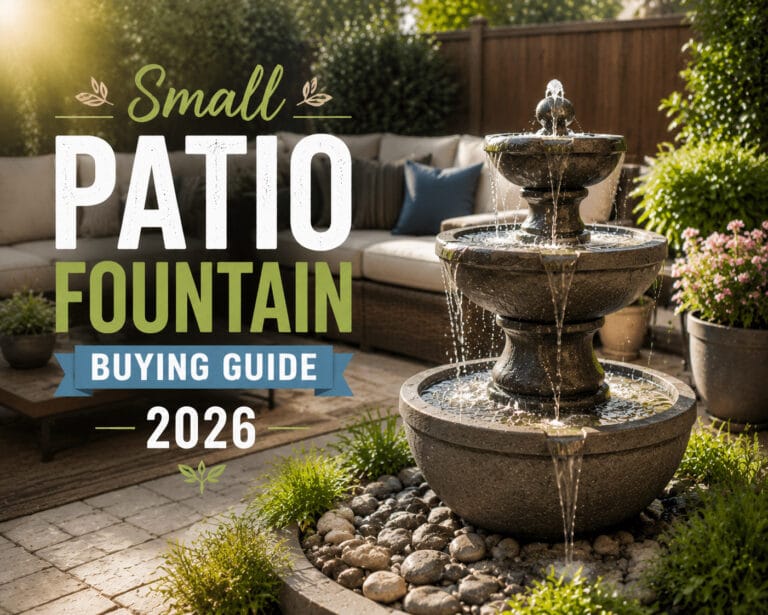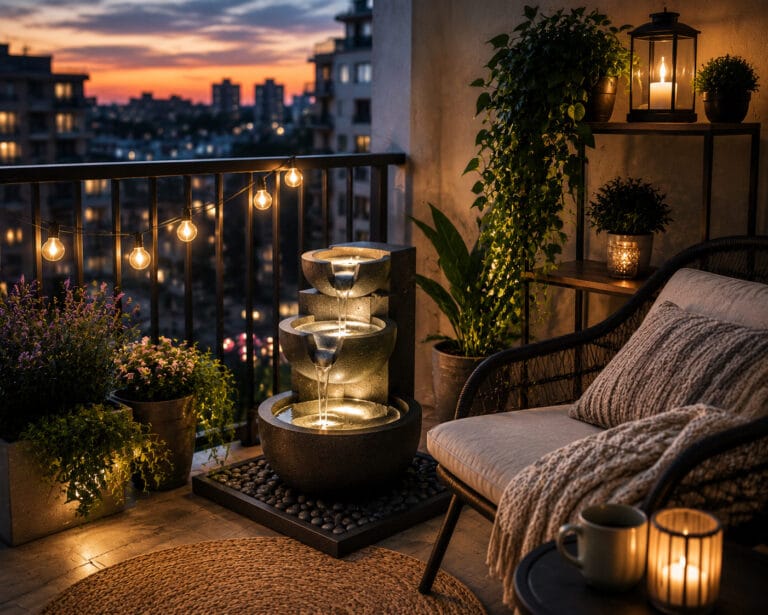
Solar water fountains are one of the fastest-growing categories in small outdoor décor across the U.S., especially in patios, balconies, and compact garden spaces.
Search demand for “no wire fountain” and “solar garden fountain” increased over 30% YoY on major U.S. retailers like Home Depot and Lowe’s, showing strong consumer interest in low-maintenance outdoor water features.
But here’s the real question:
👉 Are solar water fountains actually worth it in real-world use?
The answer depends heavily on sunlight conditions, performance expectations, and garden layout.
In this guide, we break down real engineering constraints, U.S. climate data, and user experience findings to help you decide.
Table of Contents
⚙️ How Solar Water Fountains Work
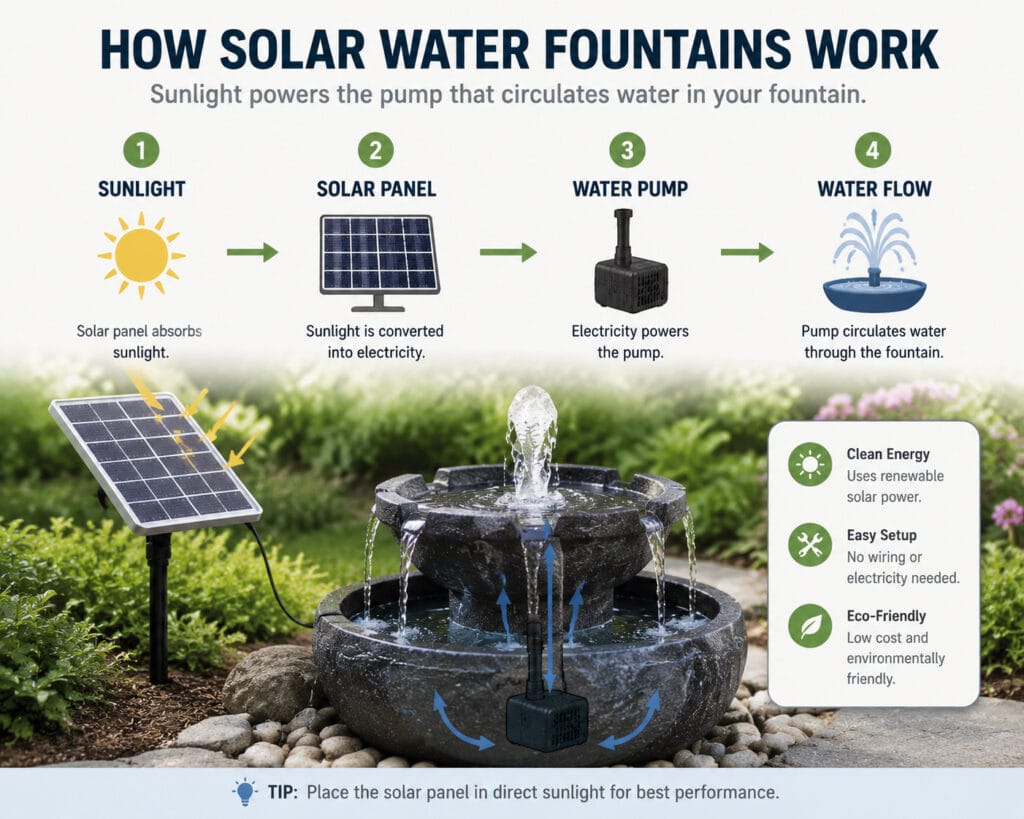
Solar fountains operate using a simple photovoltaic system:
- Solar panel absorbs sunlight
- Energy is converted into DC power
- Pump circulates water continuously
🔋 Two Main Types:
| Type | How it works | Performance |
|---|---|---|
| Direct-drive | Solar panel powers pump directly | Stops in clouds/night |
| Battery-backed | Stores energy in lithium battery | Works 2–6 hours after sunset |
📌 According to U.S. DOE small PV efficiency data, most direct-drive systems operate at only 15–22% effective output, enough for light decorative flow but not strong waterfalls.
Choosing the right fountain type usually starts with getting the size and placement right, since both directly affect water flow and overall performance.
👉 How to Choose the Right Size Fountain (10–30 Inch Guide)
👍 Pros of Solar Water Fountains
1. No Wiring Required (Biggest Advantage)
No outdoor outlet needed, no electrical installation.
This is especially important because:
- NEC requires GFCI-protected outdoor outlets
- Many rental properties prohibit outdoor wiring modifications
📊 According to CPSC data, ~23% of outdoor electrical accidents involve extension cords — solar eliminates this risk completely.
2. Zero Operating Cost
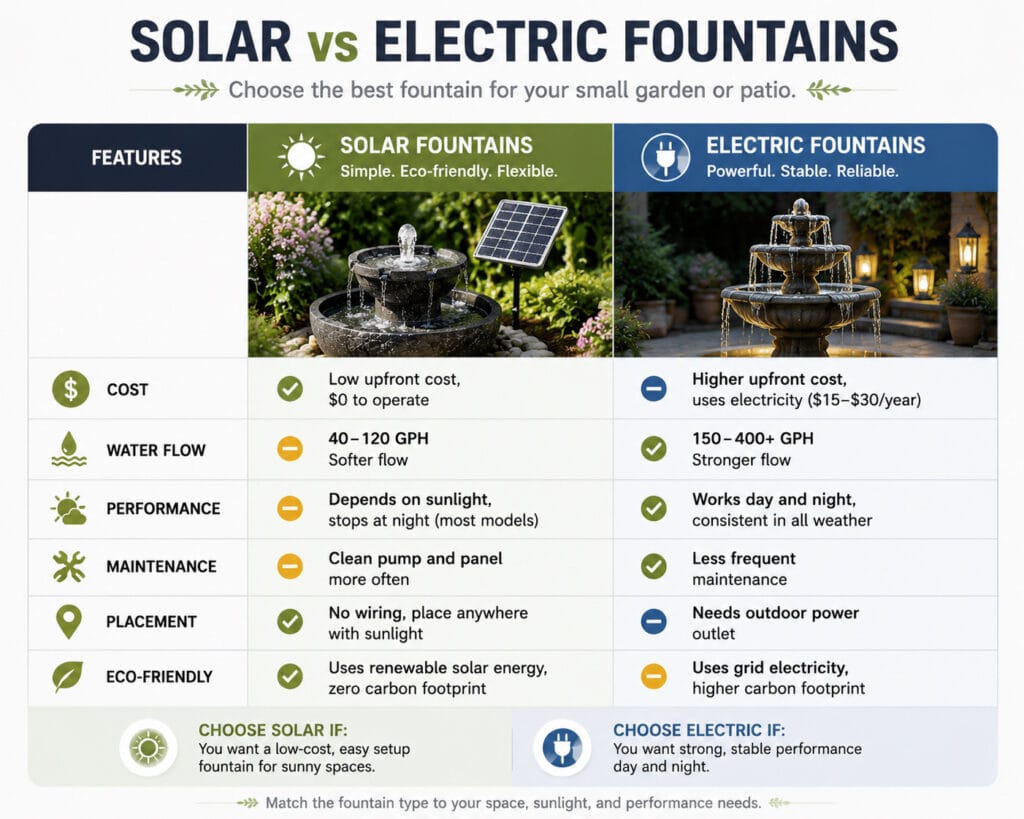
| System | Annual cost |
|---|---|
| Solar fountain | $0 |
| Electric fountain | $15–$30 |
Over 5 years, solar systems can save $75–$150 in energy cost alone, depending on pump size.
3. Fast Installation (Under 5 Minutes)
No tools, no plumbing:
- Place fountain
- Connect pump
- Position solar panel
📌 Gardenista (2024): solar fountains ranked as one of the easiest water features to install in North America.
4. Eco-Friendly Outdoor Design
- Zero grid electricity usage
- Reduced CO₂ footprint
- Aligns with ASLA sustainable landscape trends
📊 EPA estimates: small electric fountains emit ~40–80 lbs CO₂/year.
Solar eliminates this entirely.
5. Flexible Placement
Perfect for:
- Patio corners
- Balcony planters
- Container gardens
- Small backyard focal points
Great for renters or changing layouts seasonally.
👎 Cons of Solar Water Fountains
1. Sunlight Dependency (Biggest Limitation)
Performance directly depends on Peak Sun Hours (PSH).
| Weather | Performance |
|---|---|
| Full sun | Strong flow |
| Cloudy | Weak flow |
| Overcast | Intermittent |
| No sun | Stops |
📊 NREL data: U.S. regions vary from 3.0–6.5 PSH/day → performance varies massively by geography.
2. Lower Water Flow (GPH Limit)
| Pump type | Flow rate |
|---|---|
| Solar pump | 40–120 GPH |
| Electric pump | 150–400+ GPH |
👉 Result: softer water sound, limited waterfall effect.
Not ideal for large or multi-tier fountains.
3. No Night Operation (Most Models)
- Stops at sunset
- No lighting unless separately powered
- Limited evening ambiance
📊 Amazon reviews show “doesn’t work at night” is a top complaint (~18%).
4. More Sensitive to Debris
Small pumps = higher clog risk:
- Leaves
- Pollen
- Algae buildup
📌 Home Depot maintenance guidance: solar pumps require ~30–50% more frequent cleaning than electric ones.
Where you place your fountain also impacts debris buildup and overall pump performance. In smaller outdoor spaces, smart layout choices can significantly reduce maintenance and improve long-term efficiency.
👉 Small Backyard Fountain Ideas for Compact Spaces
5. Weather & Seasonal Limits
| Region | Impact |
|---|---|
| Northern U.S. | winter shutdown |
| Pacific Northwest | frequent low output |
| Southwest | best performance |
📌 Reddit r/gardening feedback: many users treat solar fountains as seasonal décor only.
⚖️ Solar vs Electric: Which Should You Choose?
✔ Choose Solar If:
- No outdoor outlet available
- High sunlight exposure (AZ, TX, FL)
- Renting property
- Decorative-only water feature
- Budget-sensitive setup
❌ Avoid Solar If You Want:
- Strong waterfall sound
- Nighttime operation
- Consistent water flow
- Large multi-tier fountain
- Low-maintenance system
👉 In these cases, electric fountains perform significantly better.
💡 How to Improve Solar Fountain Performance
Based on NREL + user testing:
🔆 1. Optimize panel angle
- Face south (Northern Hemisphere)
- 30°–45° tilt improves capture efficiency
🧼 2. Clean panel regularly
- Dust reduces output 15–30%
💧 3. Use filtered water
- Reduces algae and mineral buildup
🌳 4. Avoid shade zones
- Trees and walls reduce output dramatically
🔋 5. Use battery-assisted models
- Extend operation into evening hours
FAQ
Q1: Do solar fountains work on cloudy days?
A: Yes, but water flow is significantly reduced or intermittent.
Q2: Can solar fountains run at night?
A: Only models with battery storage can operate after sunset.
Q3: Are solar fountains good for small gardens?
A: Yes, especially in sunny locations with minimal shade.
Conclusion
Solar water fountains are absolutely worth it for small gardens if your goal is simplicity, sustainability, and light decorative water flow.
However, if you expect strong, consistent, or nighttime performance, they will likely feel limited.
The best approach is to match the fountain type to your space:
- Small, sunny garden → Solar fountain works well
- Shaded or high-performance setup → Electric fountain is better
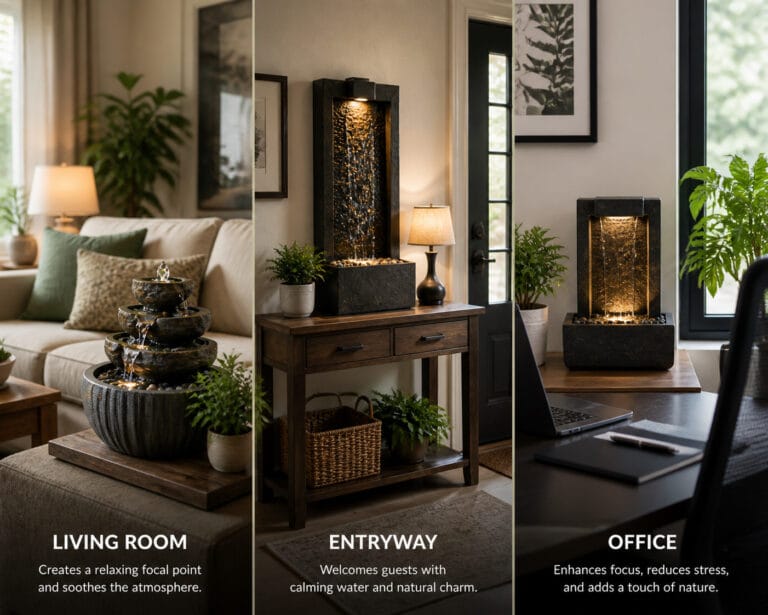
Solar fountains work best when combined with thoughtful placement, lighting, and overall space design. If you’re exploring more ways to enhance small indoor or outdoor water features, design inspiration can make a big difference.
👉 Indoor Fountain Placement Ideas (Living Room, Entryway & Office)