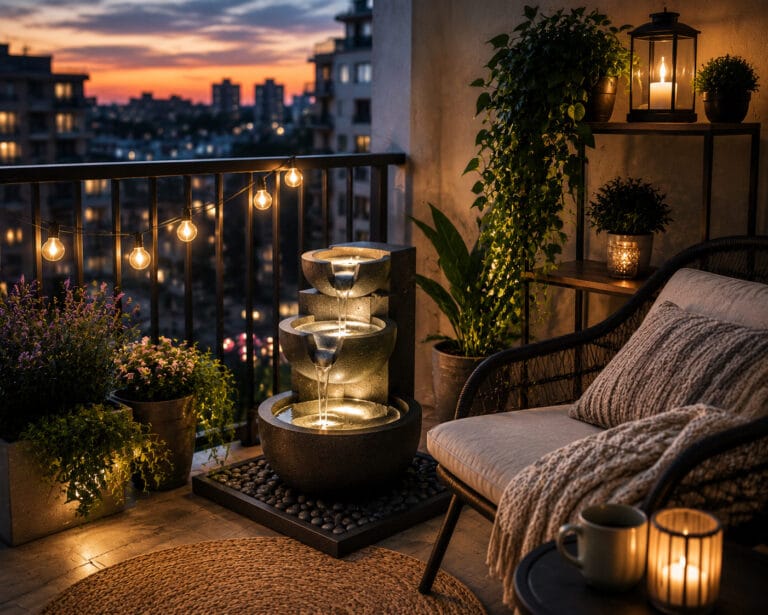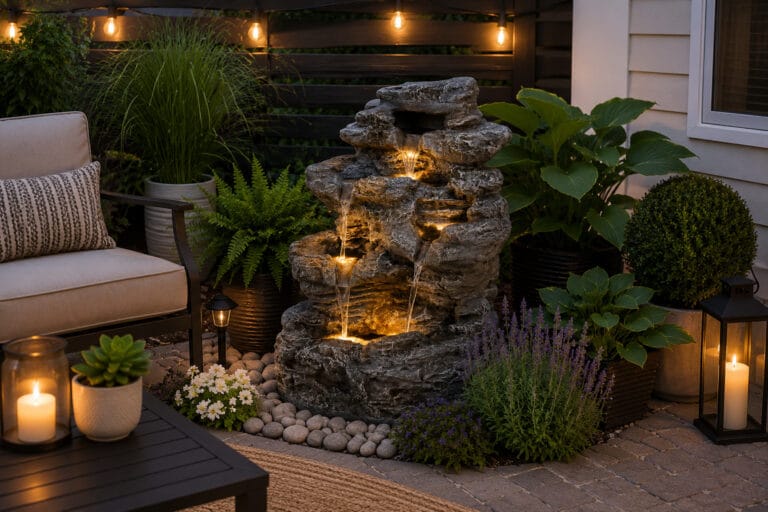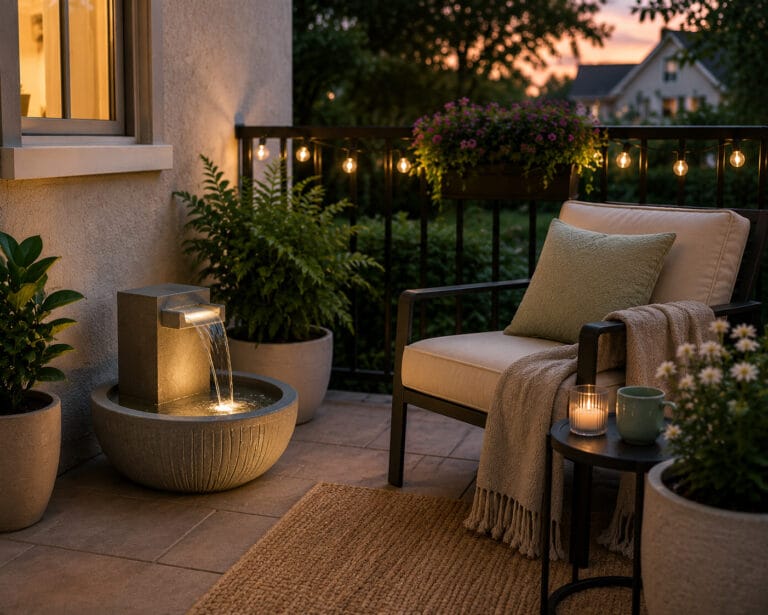

A small patio, balcony, or compact backyard does not need a large landscape project to feel more relaxing. A well-chosen water fountain can add movement, sound, and a finished focal point without taking over the space.
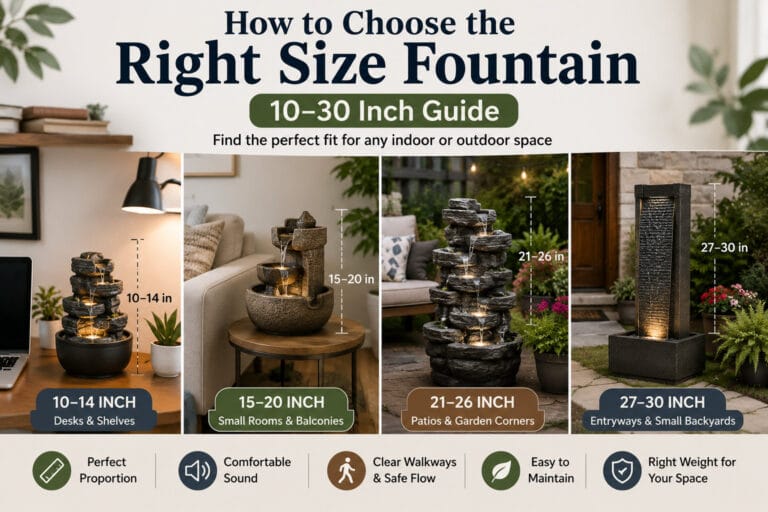
For most small outdoor areas, a 10–30 inch fountain is the most practical range. It is large enough to create visual interest, but still manageable for patios, apartment balconies, porches, and garden corners.
This guide explains how to choose the right small patio water fountain based on size, material, placement, water sound, safety, and maintenance.
Table of Contents
What Size Fountain Works Best for a Small Patio?
For compact outdoor spaces, size matters more than almost anything else. A fountain that is too large can make a patio feel crowded, while one that is too small may disappear visually.
| Fountain Height | Best For | Space Notes |
|---|---|---|
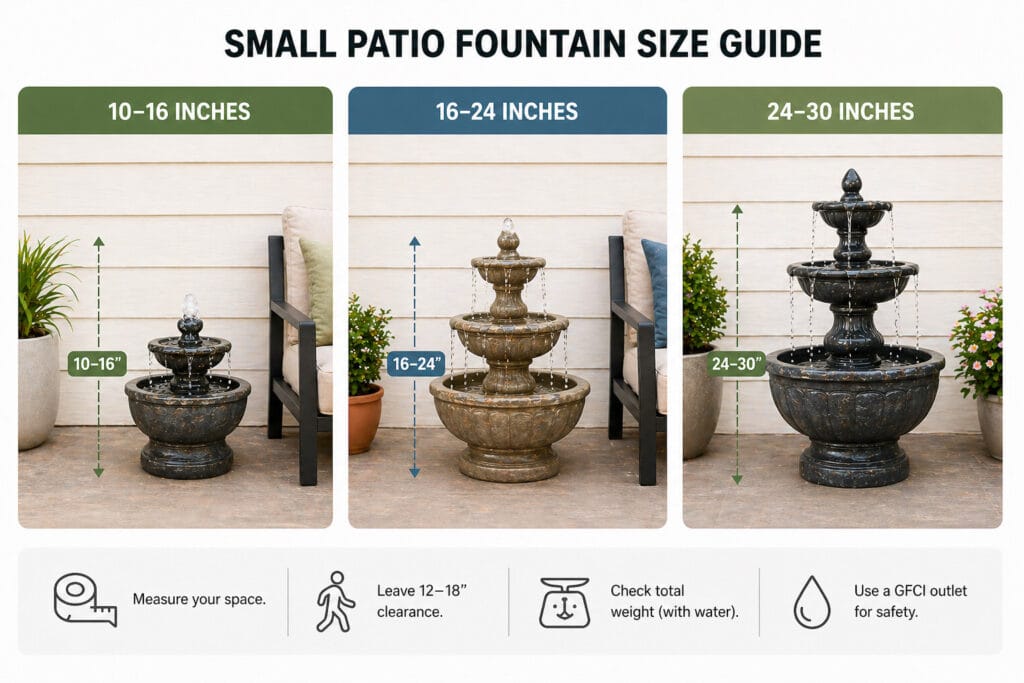
| 10–16 inches | Narrow balconies, small corners, side tables | Best when floor space is very limited |
| 16–24 inches | Most small patios and porches | Best balance of visibility and space-saving |
| 24–30 inches | Larger small patios or backyard corners | Works well as a focal point |
A simple rule: if your patio is under about 60 sq ft, stay close to 16–24 inches unless the fountain has a very narrow footprint.
Leave at least 12–18 inches of clear space around the fountain for cleaning, refilling, and safe movement. For balconies and decks, also consider total weight after water is added. Residential deck and balcony live-load requirements vary by code and location, but 40 psf is a commonly referenced residential deck design load; older or unusual structures should be checked more carefully.
Best Water Fountain Types for Small Patios
Not every fountain style works well in a compact space. For AgedFlow.COM products, the best options are usually small outdoor fountains, balcony fountains, compact garden fountains, and indoor/outdoor resin fountains.
1. Resin or Polyresin Fountains
Resin and polyresin fountains are usually the most practical choice for small patios.
They are:
- Lighter than natural stone
- Easier to move
- Usually more affordable
- Available in stone-look, rustic, modern, and tiered designs
- Suitable for renters or homeowners who may want to rearrange the space
For small patios, resin fountains are especially useful because they give the look of stone without the heavy weight.
Best for: patios, balconies, porches, rental homes, small garden corners.
2. Vertical or Column Fountains
Vertical fountains work well when floor space is limited. Instead of spreading outward, they use height to create a stronger visual effect.
They are good for:
- Narrow patios
- Balcony corners
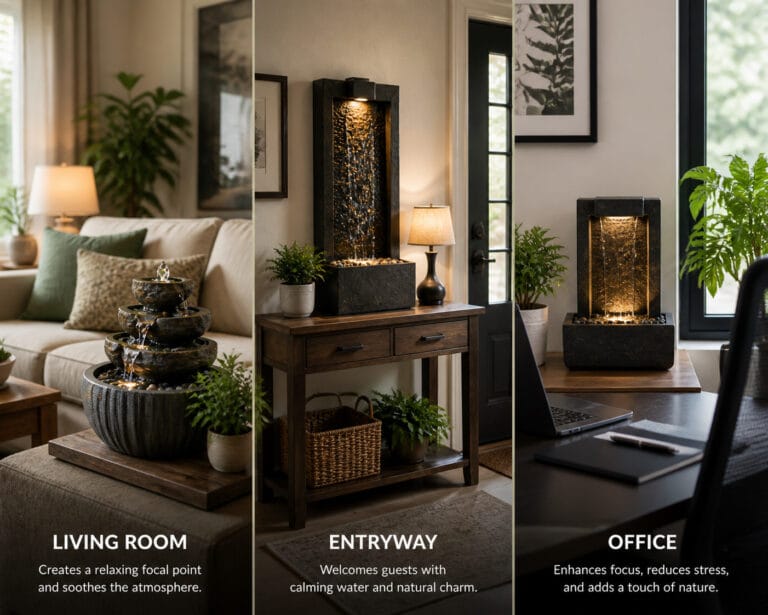
- Entryway corners
- Small backyard walls
- Spaces beside outdoor seating
A vertical fountain can make a small patio feel more designed without adding clutter.
Best for: narrow spaces and modern patio layouts.
3. Rustic Stone-Look or Barrel-Style Fountains
Rustic fountains pair well with plants, wood furniture, outdoor rugs, and farmhouse-style patios.
They can create a warmer, more natural feeling than sleek modern fountains. Stone-look resin is often better than real stone for small patios because it is easier to handle and usually less demanding to maintain.
Best for: cottage, farmhouse, garden, and natural outdoor styles.
4. Small Tiered Fountains
Tiered fountains create more movement and usually produce a more noticeable water sound. They are ideal when you want the fountain to feel like the main feature of the patio.
However, for apartments or close neighbors, choose a softer-flow tiered design rather than a loud waterfall-style fountain.
Best for: users who want stronger atmosphere and visible water movement.
Material Comparison for Small Outdoor Fountains
| Material | Pros | Cons | Best Use |
|---|---|---|---|
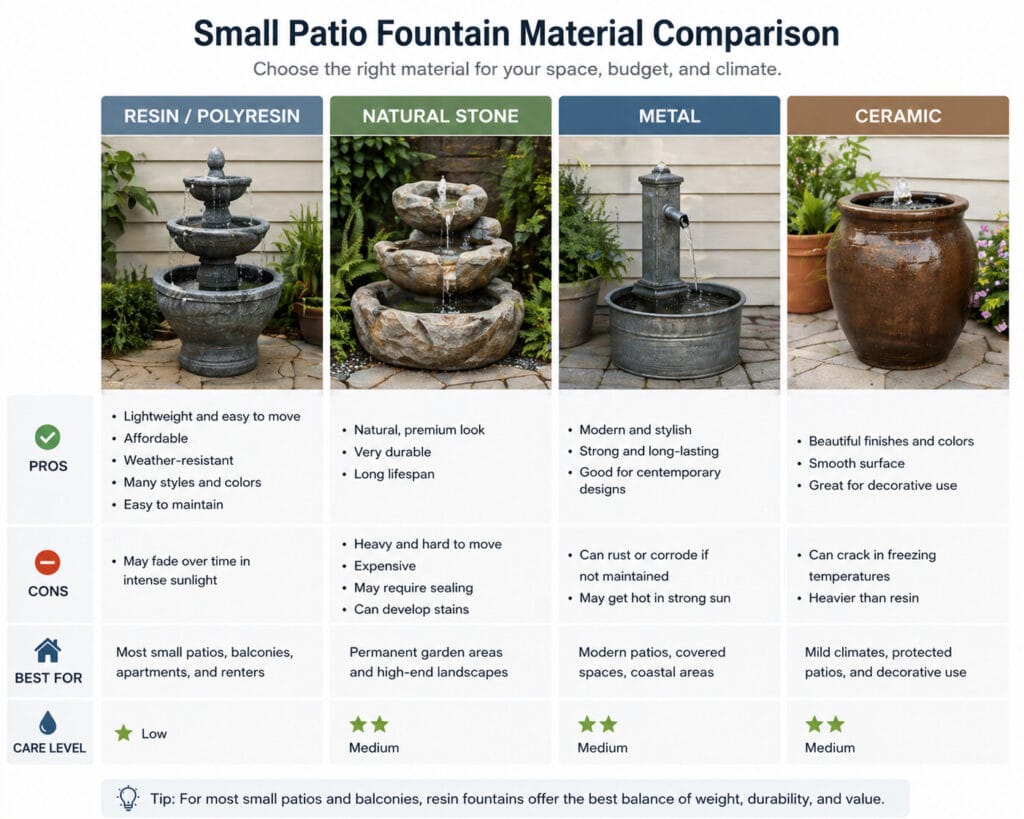
| Resin / Polyresin | Lightweight, affordable, easy to move, many styles | Can fade over time if low quality | Most small patios and balconies |
| Natural Stone | Premium look, heavy, durable | Expensive, hard to move, may need sealing | Permanent garden areas |
| Metal | Modern, stylish, long-lasting when well made | May need rust/corrosion care | Modern patios, covered spaces |
| Ceramic | Attractive color and glaze | Can crack in freeze-thaw climates | Mild climates or protected areas |
For most small patios, resin or polyresin is the safest starting point. It gives you the look of a decorative outdoor fountain without the weight and installation difficulty of stone.
Outdoor Electrical Safety: Do Not Skip This
Most small fountains use an electric pump. Because water and electricity are involved, safety matters.
For outdoor fountains, use a properly rated outdoor outlet with GFCI protection. The National Electrical Code expanded GFCI protection requirements for outdoor dwelling-unit outlets, and GFCI devices are designed to shut off power when dangerous ground-fault conditions occur.
Before placing a fountain, check:
- Is there a nearby outdoor-rated outlet?
- Is the outlet GFCI protected?
- Is the cord kept away from standing water?
- Is the plug protected from rain splash?
- Is the pump designed for outdoor use?
If your patio does not have a safe outdoor outlet, consider a solar-powered fountain or consult a licensed electrician.
Where Should You Place a Small Patio Fountain?
Placement can make the same fountain feel either elegant or awkward.
Best Placement Ideas
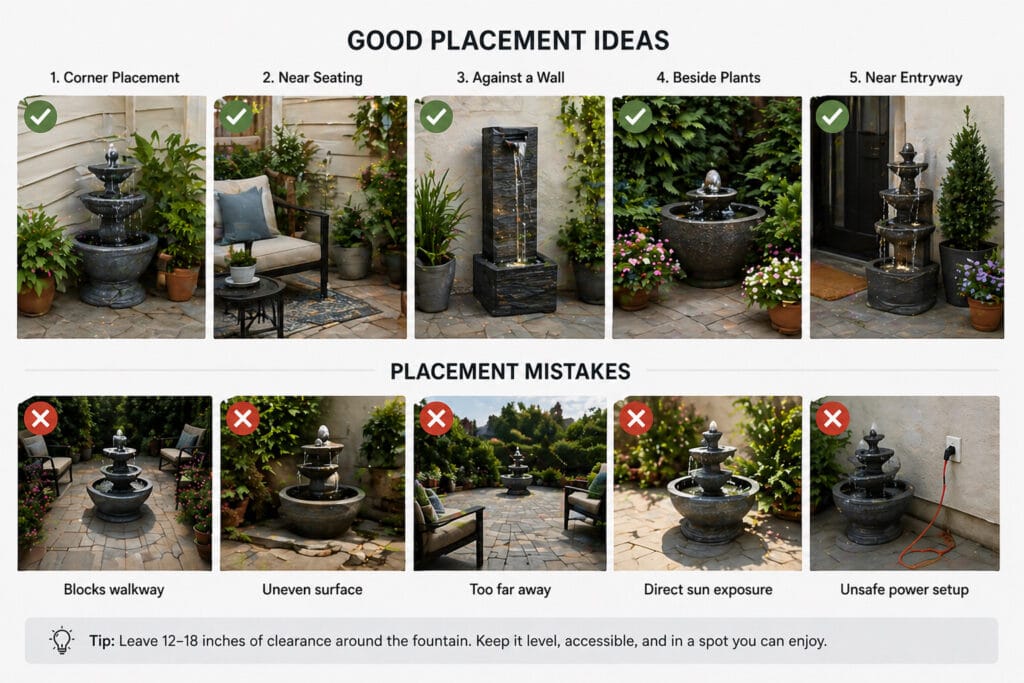
| Placement | Why It Works |
|---|---|
| Corner placement | Saves space and creates a natural focal point |
| Near seating | Lets you enjoy the water sound while relaxing |
| Against a wall or fence | Reduces visual clutter and adds depth |
| Beside plants | Creates a mini garden feeling |
| Near an entryway | Adds a welcoming first impression |
The American Society of Landscape Architects describes residential outdoor design as a way to improve comfort, connection to nature, sustainability, and meaningful outdoor living. A small fountain can support that goal when it is placed where people actually sit, walk, and relax.
Avoid These Placement Mistakes
Do not place the fountain where it:
- Blocks a walking path
- Sits on an uneven surface
- Splashes onto cushions or doorways
- Is too far away to hear
- Receives intense all-day sun
- Requires an unsafe extension cord setup
For algae control, partial shade is usually better than full sun.
How Loud Should a Small Patio Fountain Be?
Small fountains usually create a soft water sound, but the exact noise level depends on the design.
In general:
- Single-stream fountains sound softer
- Tiered fountains sound more noticeable
- Waterfall-style fountains create stronger sound
- Adjustable pumps give you better control
For apartments and balconies, choose a gentle-flow design. For backyard patios near traffic or HVAC noise, a tiered fountain can help create a more relaxing background sound.
A good patio fountain should sound pleasant from the seating area, not loud from across the property.
Water Use and Maintenance
Most small patio fountains are recirculating fountains, meaning the same water cycles through the pump. This is much more practical than a pass-through fountain that constantly uses fresh water.
EPA WaterSense notes that outdoor residential water use in the United States is significant, with nearly 8 billion gallons used outdoors each day, mainly for landscape irrigation. While a small recirculating fountain uses far less than irrigation, it is still smart to reduce evaporation, leaks, and oversplash.
ASLA has also warned that poorly managed pass-through or misaligned water features can waste large amounts of water, especially when spray or mist falls outside the recirculation loop.
Simple Care Tips
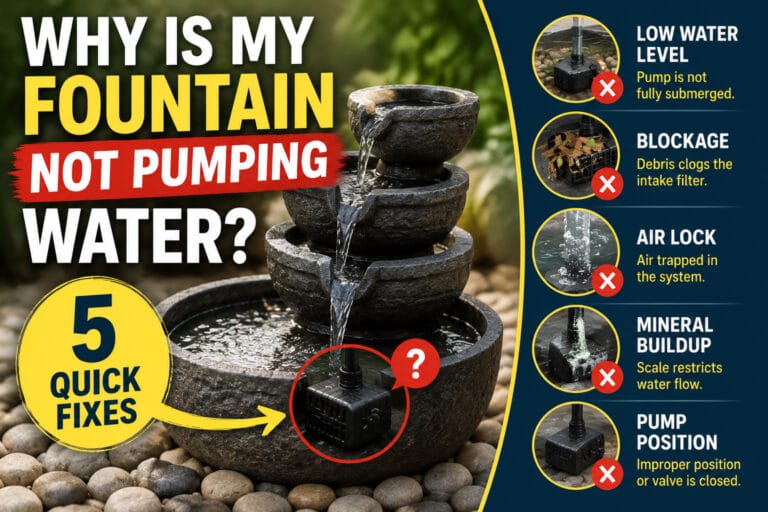
- Keep the reservoir filled to the recommended level
- Use clean water and refill as needed
- Clean the pump every few weeks
- Remove leaves and debris quickly
- Avoid placing the fountain in heavy direct sun
- Drain and store the pump before freezing weather
For cold climates, do not leave water sitting inside the fountain during freezing temperatures. Ice expansion can damage the pump, tubing, or fountain body.
Best Small Patio Fountain Recommendations by Space
For Apartment Balconies
Choose a lightweight resin fountain under 24 inches with a soft water sound. Avoid heavy stone, wide bases, or loud waterfall designs.
For Small Patios
A 16–24 inch resin or stone-look fountain is usually the best balance. It can sit beside a chair, planter, or side table without dominating the layout.
For Porch Corners
A vertical fountain works well because it adds height without taking much floor space.
For Compact Backyards
A 24–30 inch tiered or rustic fountain can create a stronger focal point, especially near plants, outdoor chairs, or a garden wall.
Final Thoughts
A small patio does not need a large fountain to feel finished. The best small patio water fountain is one that fits your space, sounds pleasant, is easy to maintain, and feels natural with your outdoor furniture and plants.
For most small patios, a 16–24 inch resin or stone-look fountain is the safest choice. For narrow balconies, go smaller and lighter. For a compact backyard corner, a 24–30 inch fountain can become a beautiful focal point.
Choose the right size, place it thoughtfully, and your small outdoor space can feel calmer, more inviting, and more complete.