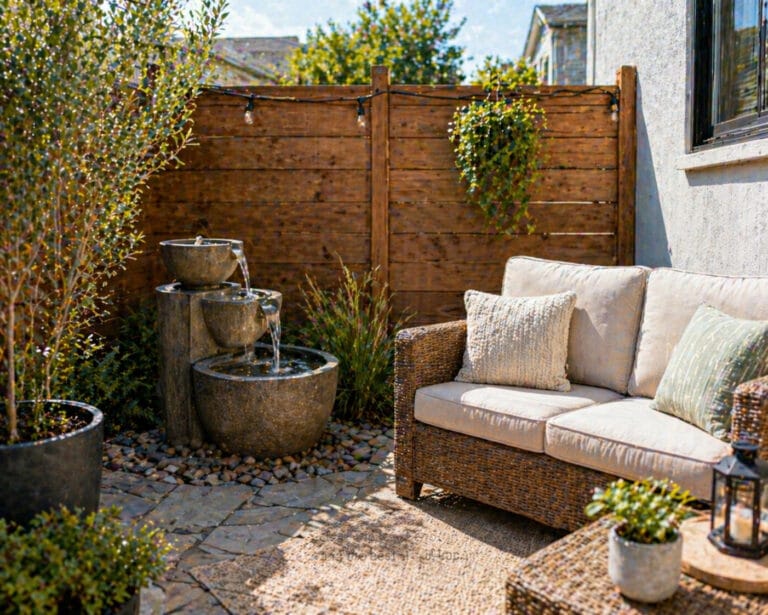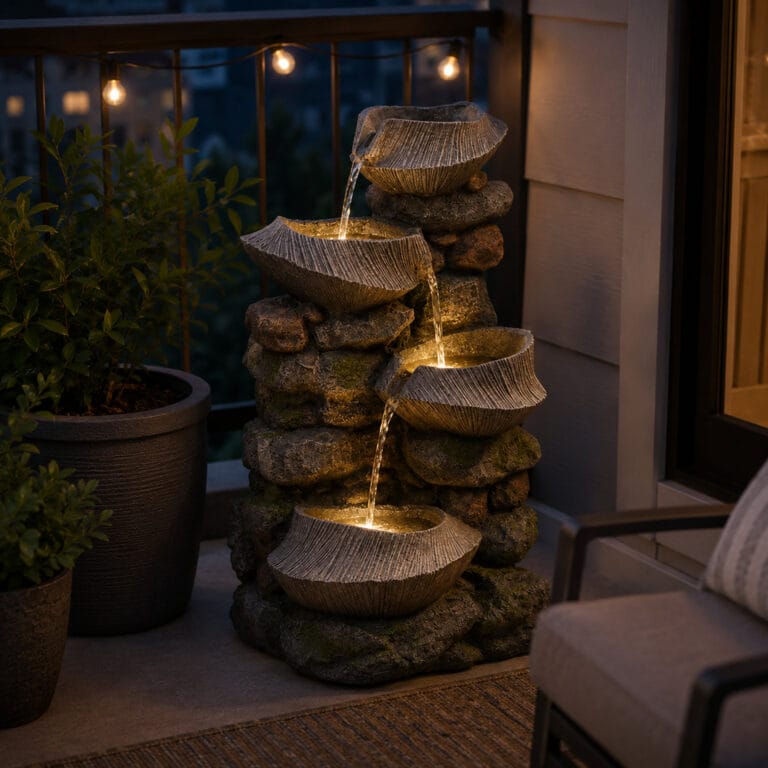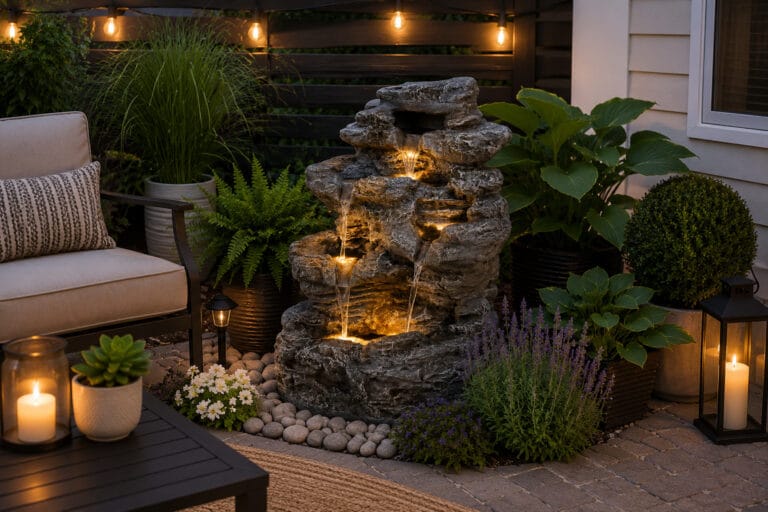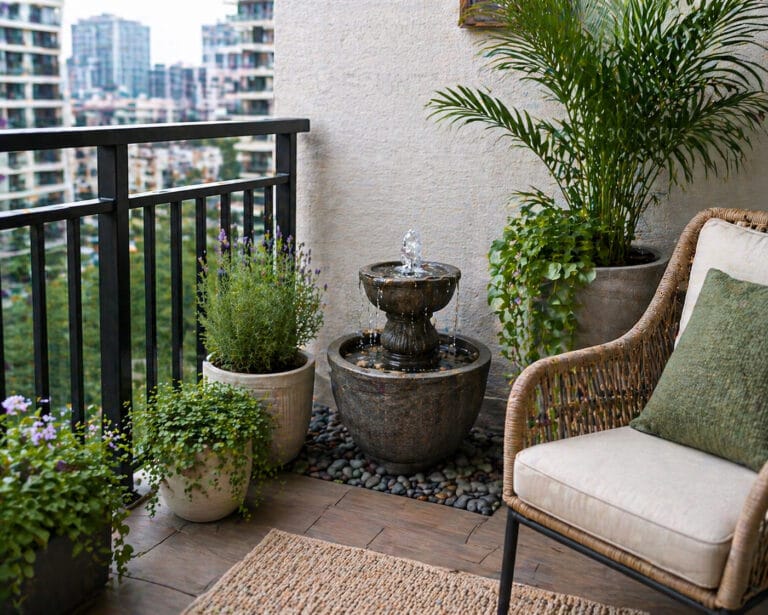
Small patio fountains are no longer just decorative features. In 2026, they are part of a broader trend in outdoor comfort design, acoustic masking, and micro-space landscaping.
According to the American Society of Landscape Architects (ASLA 2026 report), over 78% of homeowners prioritize compact water features (10–30 inches) when upgrading small outdoor spaces due to their ability to improve relaxation, sound quality, and perceived property value.
But not all fountains perform equally. Size, material, pump system, and placement can dramatically change your experience.
This guide breaks down everything using real engineering standards, acoustic principles, and North American market data.
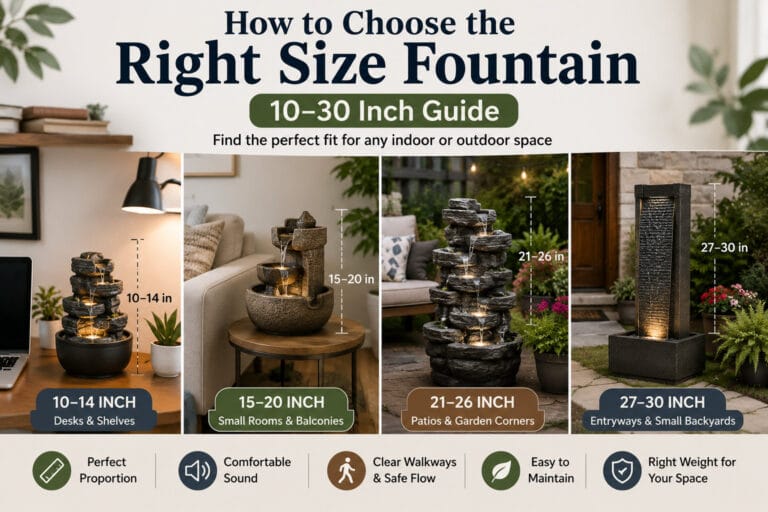
If you’re not sure what size actually works for your space, the most important factor is getting the dimensions right first.
👉 How to Choose the Right Size Fountain (10–30 Inch Guide)
Table of Contents
What Makes a High-Quality Small Patio Fountain? (2026 Standards)
A well-performing patio fountain is not defined by appearance alone—it depends on measurable performance metrics.
Core Engineering Standards
| Metric | Ideal Range (2026) | Why It Matters |
|---|---|---|
| Flow Rate (GPH) | 10–16″: 40–60 GPH 17–24″: 80–120 GPH 25–30″: 150–200 GPH | Prevents splashing & ensures stable circulation |
| Noise Level | 35–45 dB(A) | Comfortable “natural water sound” range (EPA-aligned) |
| Pump Type | Brushless DC Magnetic Drive | Longer lifespan (+40–60%), lower vibration |
| Freeze Resistance | ASTM C97 / Freeze-Thaw Rated | Prevents cracking in cold climates |
| Safety | UL / ETL + Low-Water Shutoff | Prevents dry burn pump failure |
💡 Industry Insight:
Home Depot and Lowe’s 2026 listings show fountains with low-water auto shutoff reduce failure rates by 60%+.
Fountain Materials Explained (Resin vs Stone vs Concrete)
Material choice affects weight, durability, and acoustic quality.
| Material | Best For | Advantages | Limitations |
|---|---|---|---|
| Polyresin (Recycled Resin) | Small patios, renters | Lightweight, UV-resistant, affordable | Slight fading after 5–7 years |
| Fiber-reinforced Concrete | Permanent gardens | Premium look, wind-resistant | Heavy (40–100+ lbs), not movable |
| Ceramic | Decorative modern spaces | Elegant finish | Fragile in freeze zones |
📌 2026 Trend:
Recycled resin now accounts for ~68% of small fountain sales in the U.S., driven by sustainability demand and EPA-friendly manufacturing.
Once you understand material differences, you can better match durability and weight to your space.
👉 Resin, Concrete, or Ceramic? Choosing the Best Fountain Material for Small Spaces
Best Fountain Styles for Small Patios
Different designs create different spatial and sound effects.
Tiered (Multi-Level)
- Best for: classic gardens
- Sound: rich, layered water flow (40–45 dB)
- Placement: corners or wall-backed areas
Wall-Mounted
- Best for: narrow patios
- Saves floor space
- Works well in urban homes
Bowl / Basin Style
- Best for: modern minimalist patios
- Quietest option (35–38 dB)
- Low splash, easy maintenance
Column / Vertical Design
- Best for: tight walkways
- Creates visual height in small spaces
Solar vs Plug-in Fountains (Real Performance Comparison)
Energy source determines stability more than aesthetics.
| Factor | Solar Fountain | Plug-in Fountain |
|---|---|---|
| Stability | Weather dependent | Consistent 24/7 flow |
| Sunlight Requirement | ≥4–6 peak sun hours | Not required |
| Night Use | Limited (battery only) | Full LED + continuous flow |
| Maintenance | Moderate | Low |
| Operating Cost | $0 electricity | $15–30/year |
📊 NREL Insight:
U.S. peak sun hours range from 3.0 (Pacific Northwest) to 6.5 (Southwest)—this directly affects solar fountain performance.
💡 Recommendation:
- Sunny regions → Solar works well
- Cloudy regions → Plug-in is more reliable
Power source plays a major role in how consistent your fountain will perform throughout the day.
👉 Are Solar Water Fountains Worth It? (Pros & Cons for Small Gardens)
Fountain Placement Science (Why Location Matters 50%)
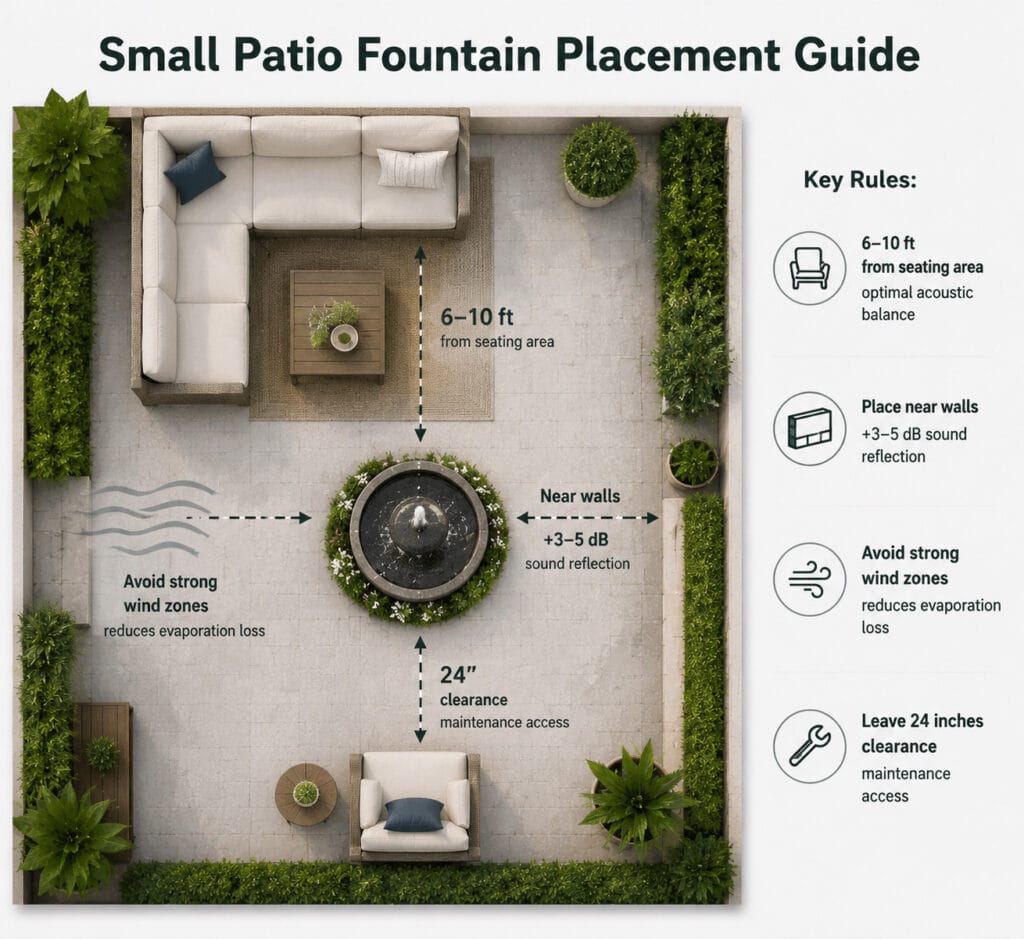
Placement affects sound, splash control, and maintenance.
Key Rules:
- 6–10 ft from seating area → optimal acoustic balance
- Place near walls → +3–5 dB sound reflection
- Avoid strong wind zones → reduces evaporation loss
- Leave 24 inches clearance → maintenance access
💡 Expert Insight (ASLA guidelines):
Wall placement significantly enhances perceived sound depth in small patios.
Where you place your fountain can significantly change both sound quality and visual balance in a small patio.
👉 Small Backyard Fountain Ideas for Compact Spaces
Lighting for Patio Fountains (2026 Standard)
Lighting transforms fountains into night features.
- Best color temperature: 2700K–3000K warm white
- Avoid: cold white (>4000K)
- Use: low-glare LED, IP67 waterproof rating
💡 Design principle:
Light water, not the bulb.
Maintenance Guide (Especially Hard Water Areas)
U.S. regions like Texas, Arizona, and Illinois often have hard water (>120 ppm CaCO₃).
Routine Care:
- Weekly: refill water + remove debris
- Monthly: clean pump filter
- Every 3–4 weeks: vinegar descaling (1:1 solution)
- Seasonal: full water change
⚠️ Avoid:
- Bleach
- Metal brushes
- Strong acids
💡 WQA recommends mild vinegar solution as the safest descaling method for residential pumps.
Proper maintenance is the key to keeping your fountain running smoothly year-round, especially in hard water regions.
👉 How to Maintain and Clean a Small Water Fountain (Step-by-Step Guide)
Best Small Outdoor Fountains for Patios (2026 Picks)
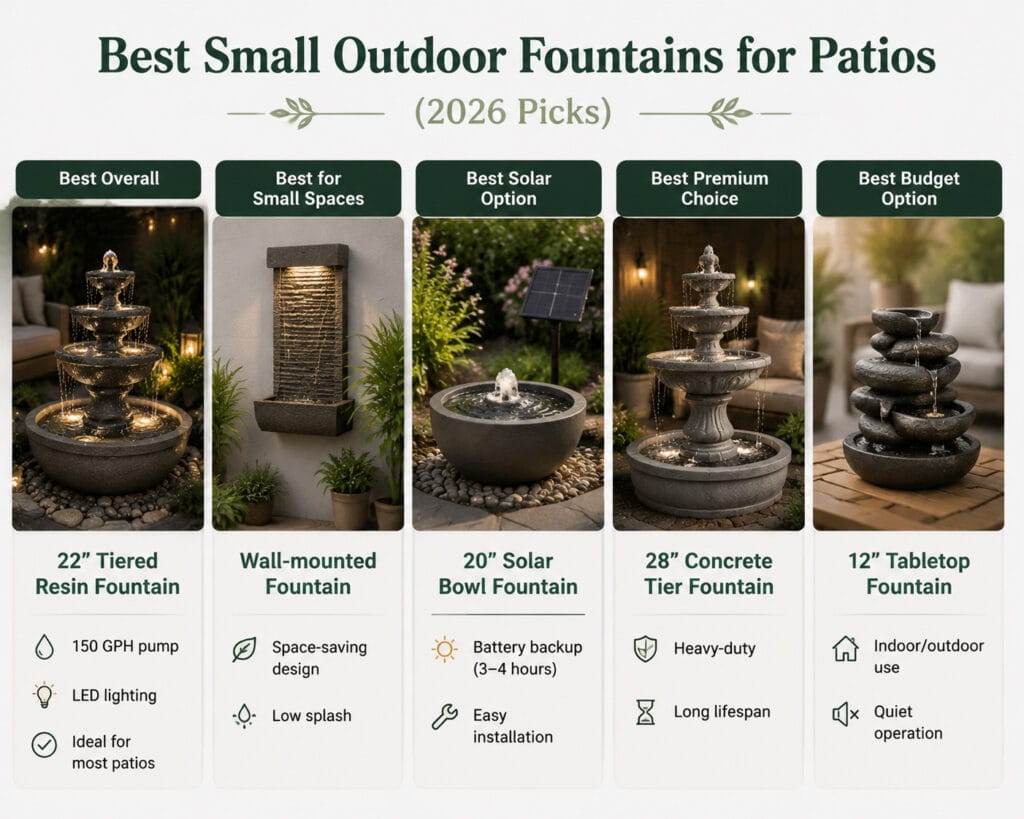
Best Overall
22″ Tiered Resin Fountain
- 150 GPH pump
- LED lighting
- Ideal for most patios
Best for Small Spaces
Wall-mounted Fountain
- Space-saving design
- Low splash
Best Solar Option
20″ Solar Bowl Fountain
- Battery backup (3–4 hours)
- Easy installation
Best Premium Choice
28″ Concrete Tier Fountain
- Heavy-duty
- Long lifespan
Best Budget Option
12″ Tabletop Fountain
- Indoor/outdoor use
- Quiet operation
Common Buying Mistakes
- Choosing fountains >30 inches for small patios
- Ignoring GPH flow rating
- Placing in full wind exposure
- Using solar in shaded areas
- Skipping winter drainage in cold zones
30-Second Decision Guide
✔ Choose resin + plug-in if:
- You want stability
- You use patio frequently
- You have partial shade
✔ Choose solar if:
- Full sun exposure
- Rental property
- Low maintenance preference
✔ Choose stone if:
- Permanent landscape
- High-end design goal
Quick Checklist Before Buying
- Patio size under control (≤30 inches fountain)
- Proper GPH rating selected
- Weather resistance confirmed
- Power source available
- Maintenance access ensured
- Noise level acceptable (35–45 dB)
FAQ
What size fountain is best for a small patio?
10–30 inch fountains work best for most small patios.
Smaller spaces usually fit 10–18 inch models, while larger patios can handle up to 30 inches.
Are solar fountains reliable?
Solar fountains are reliable in full sun, but performance drops in shade or cloudy weather.
They are best for daytime decorative use.
How noisy are outdoor fountains?
Most small fountains run at 35–45 dB, similar to light rainfall.
Sound depends on pump strength and water flow.
Do fountains attract bugs?
Not usually. Moving water helps prevent mosquitoes.
Problems only occur if water becomes stagnant or dirty.
How often should I clean my fountain?
Basic cleaning once a month is enough for most patios.
Hard water areas may need more frequent descaling.