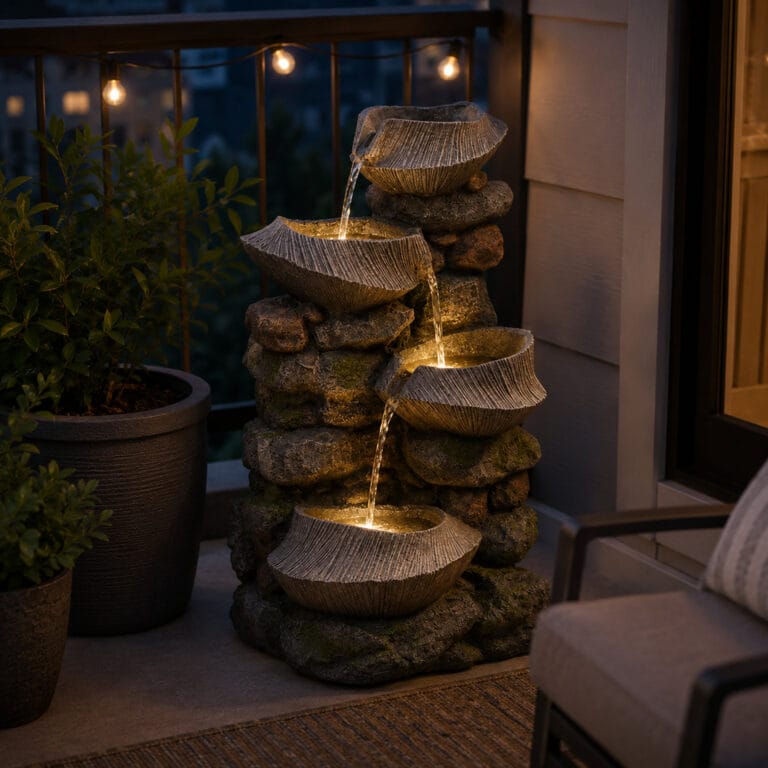

A small water fountain can bring relaxing sound, gentle movement, and a calm visual focal point to a patio, balcony, entryway, office, or living room. Most compact fountains are easier to maintain than many people expect, especially if they use a simple plug-in pump and a lightweight resin or polyresin body.
The key is routine care. A small fountain does not need complicated maintenance, but the water reservoir, surface, and pump still collect dust, minerals, pollen, leaves, and debris over time. With a simple cleaning schedule, you can keep the water clear, reduce algae and scale, protect the pump, and help your fountain run quietly.
This step-by-step guide explains how to maintain and clean a small water fountain for indoor and outdoor use.
If you’re still deciding which fountain size is right for your space, see our guide on choosing the right size fountain. The right size helps improve appearance, sound, and overall usability.
Table of Contents
Why Regular Small Fountain Maintenance Matters
Most small fountains use a closed-loop recirculating water system. The same water moves through the pump, tubing, and fountain channels again and again. As water evaporates, minerals and debris can become more concentrated inside the reservoir.
Regular maintenance helps prevent common issues before they become noticeable.
| Maintenance Benefit | Why It Matters |
|---|---|
| Clearer water | Reduces cloudy water, floating debris, and stale odors |
| Less algae growth | Limits the organic buildup that algae can feed on |
| Fewer mineral deposits | Helps prevent white scale around the basin and water outlet |
| Smoother water flow | Keeps the pump intake and tubing from becoming clogged |
| Quieter operation | A clean pump is less likely to vibrate, hum, or rattle |
| Longer pump life | Reduces strain on the pump motor and impeller |
The goal is simple: keep water moving through a clean system.
How Often Should You Clean a Small Water Fountain?
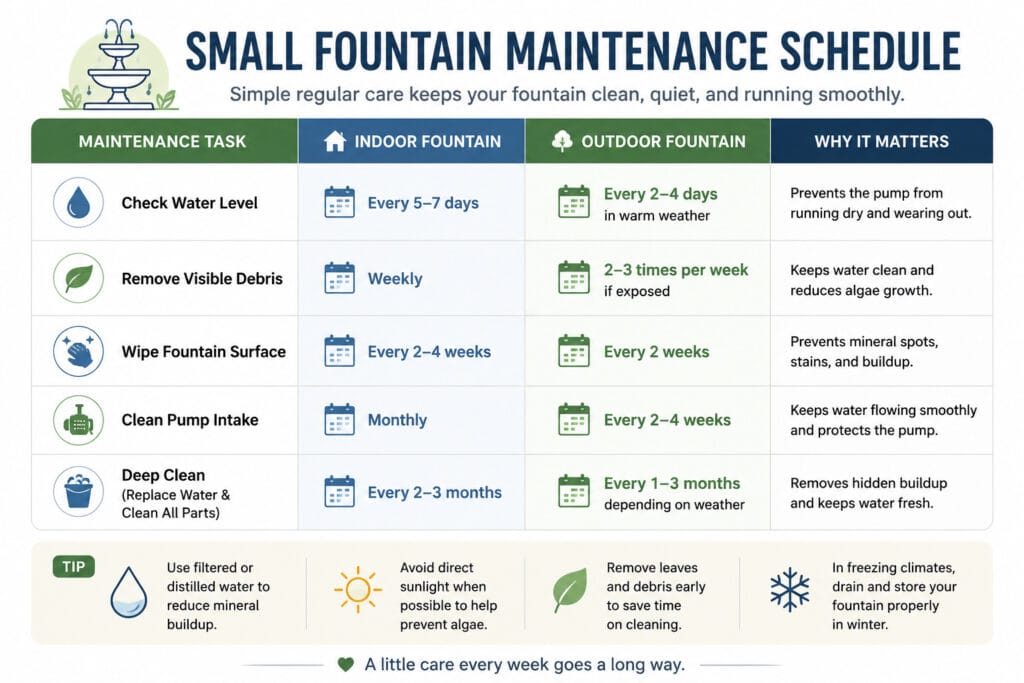
Cleaning frequency depends on location, sunlight, weather, water hardness, and how often the fountain runs.
Outdoor fountains usually need more attention than indoor fountains because they are exposed to pollen, insects, rainwater, leaves, and direct sunlight.
| Maintenance Task | Indoor Fountain | Outdoor Fountain |
|---|---|---|
| Check water level | Every 5–7 days | Every 2–4 days in warm weather |
| Remove visible debris | Weekly | 2–3 times per week if exposed |
| Wipe fountain surface | Every 2–4 weeks | Every 2 weeks |
| Clean pump intake | Monthly | Every 2–4 weeks |
| Deep clean and replace water | Every 2–3 months | Every 1–3 months depending on weather |
During hot, dry, or windy weather, water evaporates faster. If the water level drops too low, the pump may draw in air, become louder, or wear out faster.
Tools and Supplies You’ll Need
Most small fountain cleaning can be done with basic household tools.
| Item | Use |
|---|---|
| Microfiber cloth | Wiping resin, ceramic, concrete, or painted surfaces |
| Soft-bristle brush | Cleaning textured areas and basin corners |
| Old toothbrush | Cleaning pump intake, small grooves, and tubing ends |
| Small bucket | Emptying and rinsing fountain water |
| Mild dish soap | Removing light dirt and residue |
| White vinegar diluted with water | Softening mineral deposits and water spots |
| Filtered or distilled water | Reducing hard-water scale over time |
Avoid bleach, ammonia, harsh chemical cleaners, steel wool, metal scrapers, and abrasive pads. These can damage decorative finishes, weaken pump seals, or scratch resin and ceramic surfaces.
Step 1: Turn Off and Unplug the Fountain
Always disconnect the fountain before cleaning.
- Turn off the fountain.
- Unplug the power cord from the outlet.
- Wait until the water stops moving.
- Keep the plug dry while cleaning.
This step is especially important for outdoor plug-in fountains. Outdoor electrical equipment should be used with proper protection. The National Electrical Code has expanded GFCI protection requirements for dwelling outdoor outlets, and GFCI devices are designed to shut off power when electricity flows outside its normal path.
Never clean or adjust a fountain while it is plugged in.
Step 2: Empty the Water Reservoir
Remove the existing water before cleaning.
For small tabletop or indoor fountains, you may be able to carefully pour the water into a sink or bucket.
For larger patio or outdoor fountains:
- Scoop out the water with a small container.
- Remove leaves, insects, pollen, or sediment.
- Check basin corners where dirt often collects.
- Avoid splashing dirty water onto floors, cushions, or nearby furniture.
If the water is cloudy, slimy, or has an odor, do a full cleaning instead of simply adding fresh water.
For outdoor fountains, avoid draining dirty or soapy water directly into a storm drain. EPA stormwater guidance notes that runoff from hard surfaces can carry pollutants directly into storm drains and waterways without natural filtering.
Step 3: Clean the Fountain Surface
Use a soft cloth and warm water to wipe the fountain body, basin, water channels, and outlet area.
For light dirt:
- Wipe with warm water.
- Add a small amount of mild dish soap if needed.
- Rinse thoroughly.
- Dry with a soft cloth.
For mineral deposits or white water spots:
- Mix equal parts white vinegar and water.
- Apply the mixture to the affected area.
- Let it sit for 5–10 minutes.
- Gently scrub with a soft brush.
- Rinse well with clean water.
Do not let vinegar sit too long on painted or decorative surfaces. The goal is to soften scale, not soak the finish.
Note for Resin Fountains
Many compact fountains are made from resin or polyresin because the material is lightweight and easy to move. Resin is practical for small patios, balconies, and indoor spaces, but it should still be cleaned gently. Avoid rough pads or metal tools that can scratch the surface texture.
For a broader comparison of resin, concrete, and ceramic fountains, see our guide to the best fountain material for small spaces.
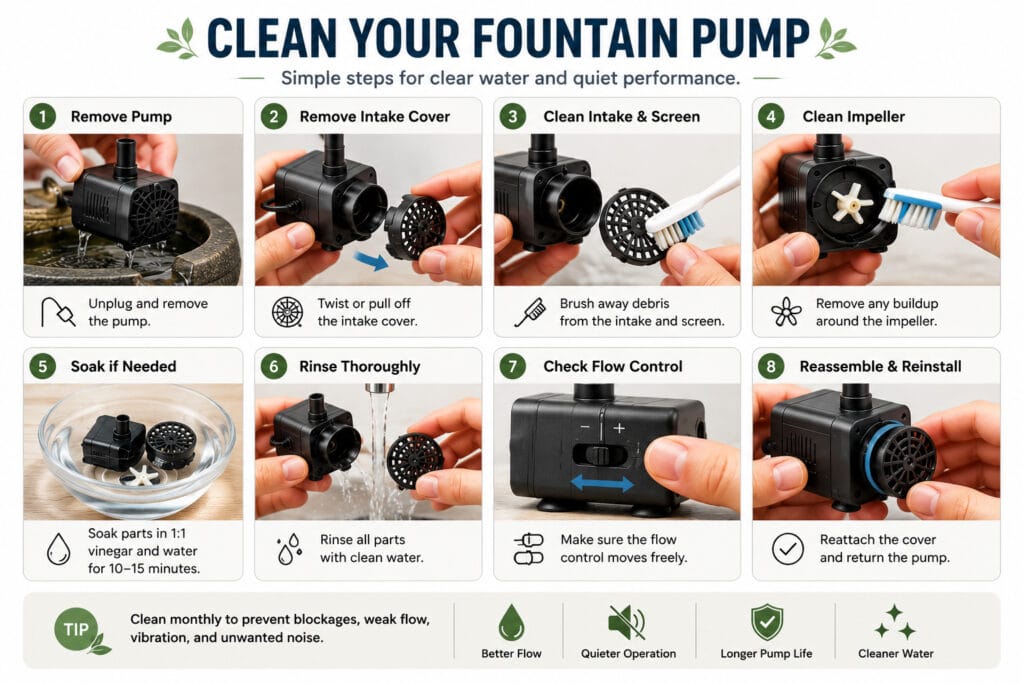
Step 4: Remove and Clean the Small Fountain Pump
The pump is the most important part of a small fountain. Even when the fountain looks clean from the outside, the pump intake may collect hair, pollen, dust, algae film, and mineral deposits.
Many small fountains use a submersible pump with a removable intake cover.
Basic Pump Cleaning Steps
- Remove the pump from the reservoir.
- Disconnect the tubing carefully.
- Remove the intake cover or front screen.
- Rinse away loose debris.
- Use an old toothbrush to clean the intake slots.
- Check the impeller area if the pump design allows access.
- Soak mineral buildup in diluted white vinegar for 10–15 minutes.
- Rinse thoroughly with clean water.
- Reattach the cover and tubing.
If your pump has a small flow-control valve, make sure it moves freely after cleaning. A clogged or stiff valve may reduce water flow or make the fountain splash more than expected.
Helpful Tip
If your fountain is outdoors under trees or near flowering plants, check the pump intake more often during spring pollen season and fall leaf season.
Step 5: Refill, Reconnect, and Test the Water Flow
After cleaning:
- Place the pump back in the reservoir.
- Reconnect tubing securely.
- Fill the fountain to the recommended water level.
- Make sure the pump is fully submerged.
- Plug the fountain back in.
- Watch the water flow for a few minutes.
The water should move smoothly and consistently. If the stream looks uneven, check that the tubing is not bent and the pump intake is not blocked.
For fountains with adjustable pumps, start with a moderate flow setting. Increase the flow if the water sound is too soft. Reduce the flow if there is splashing.
How to Prevent Algae, Scale, and Cloudy Water
Good maintenance is easier when you prevent buildup from becoming a problem.
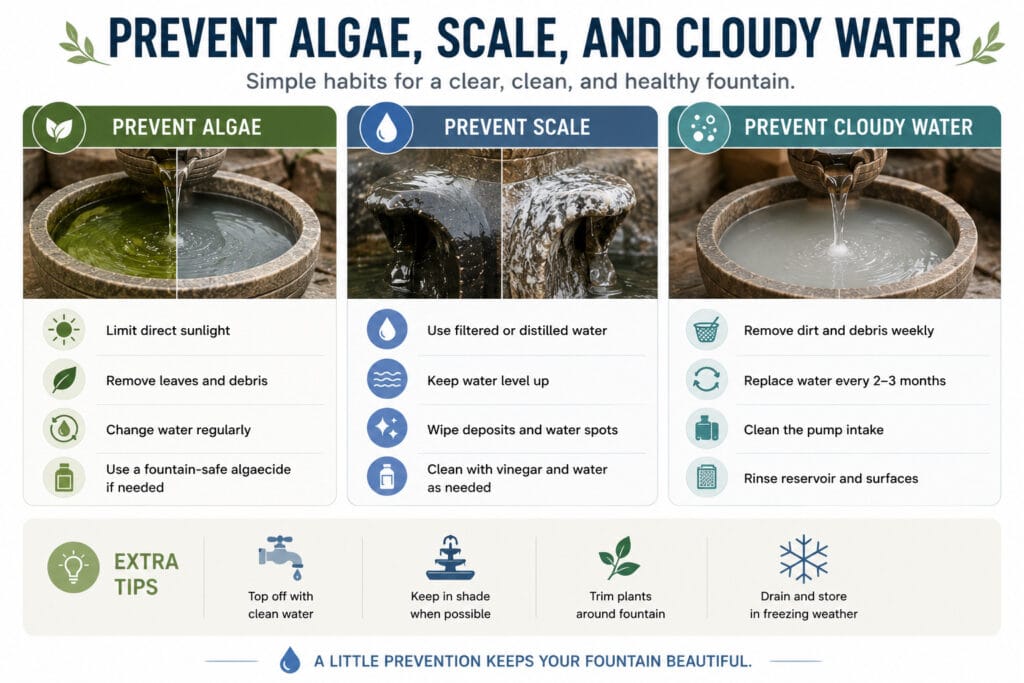
To Reduce Algae
Algae grows faster when there is sunlight, warmth, and organic debris.
Helpful habits:
- Keep the fountain out of harsh direct sun when possible.
- Remove leaves and plant debris quickly.
- Replace water regularly.
- Clean the basin before algae film becomes thick.
Outdoor fountains in sunny locations may need more frequent cleaning in spring and summer.
To Reduce Mineral Scale
Hard water can leave white deposits on the basin, outlet, and pump.
Helpful habits:
- Use filtered or distilled water when practical.
- Wipe water spots before they harden.
- Clean the pump monthly.
- Use diluted white vinegar for visible scale.
This is especially useful for indoor fountains, where white mineral marks can become more noticeable on darker finishes.
To Keep Water Clear
Cloudy water often comes from dust, pollen, algae film, old water, or a dirty pump intake.
Helpful habits:
- Keep the water level consistent.
- Remove debris weekly.
- Replace old water instead of only topping it off.
- Clean the pump intake on a schedule.
Indoor vs. Outdoor Small Fountain Maintenance
Indoor and outdoor fountains share the same basic maintenance steps, but the main problems are different.
| Category | Indoor Fountains | Outdoor Fountains |
|---|---|---|
| Main debris | Dust, pet hair, mineral deposits | Leaves, pollen, insects, rainwater, soil |
| Algae risk | Lower unless near strong sunlight | Higher in warm, sunny locations |
| Water evaporation | Usually slower | Faster in heat, wind, and direct sun |
| Cleaning focus | Water spots, dust, quiet pump operation | Debris removal, algae prevention, pump intake cleaning |
| Seasonal concerns | Humidity and nearby electronics | Freezing weather, storms, outdoor electrical safety |
For indoor fountains, also pay attention to room humidity. EPA guidance recommends keeping indoor humidity below 60%, ideally between 30% and 50%, to reduce mold risk.
For outdoor fountains, inspect the unit after storms, high winds, or heavy pollen. Organic debris can collect quickly in the reservoir and pump intake.
If you’re planning an indoor setup, see our guide on indoor fountain placement ideas. For outdoor locations, especially patios and garden corners, our small backyard fountain ideas guide offers practical placement tips that can also help reduce maintenance over time.
Common Small Fountain Cleaning Mistakes
1. Using Harsh Chemicals
Bleach, ammonia, strong acids, and industrial cleaners may damage the finish or pump parts. For regular cleaning, mild soap, water, and diluted white vinegar are usually enough.
2. Letting the Pump Run Dry
A pump should stay submerged while operating. Low water levels can cause air suction, extra noise, overheating, or premature wear.
3. Cleaning the Surface but Ignoring the Pump
A fountain can look clean while the pump intake is partially blocked. If you only wipe the surface, water flow may still weaken over time.
4. Waiting Too Long Between Cleanings
Light buildup is easy to remove. Heavy scale, thick algae, and compacted debris take much longer to clean.
5. Using Abrasive Tools on Resin or Ceramic
Steel wool, rough pads, and metal scrapers can scratch decorative surfaces. Use soft cloths and soft brushes instead.
6. Placing Indoor Fountains Too Close to Electronics
Keep indoor fountains away from computers, routers, speakers, power strips, and paper storage. Even small splashes or condensation can create avoidable problems.
Small Water Fountain Maintenance Checklist
Use this checklist after cleaning or during regular maintenance.
- Fountain unplugged before cleaning
- Water reservoir emptied
- Visible debris removed
- Basin and surface wiped clean
- Mineral spots treated with diluted vinegar
- Pump intake cover removed and cleaned
- Pump checked for hair, debris, or scale
- Tubing reconnected securely
- Water refilled to the correct level
- Pump fully submerged before restarting
- Water flow tested after cleaning
- Power cord and plug kept dry
- Indoor humidity monitored if needed
- Outdoor dirty water disposed of responsibly
Final Thoughts
Maintaining a small water fountain is less about heavy cleaning and more about simple habits. Keep the water level high enough, remove debris before it builds up, wipe the surface regularly, and clean the pump before the water flow becomes weak.
For most compact indoor and outdoor fountains, a few minutes of weekly care and a monthly pump check can make a big difference. Clean water, a clear pump intake, and gentle surface care help your fountain stay quiet, attractive, and reliable.
A well-maintained small fountain should feel effortless in daily life — a calm water feature that continues to bring movement, sound, and relaxation to your space.