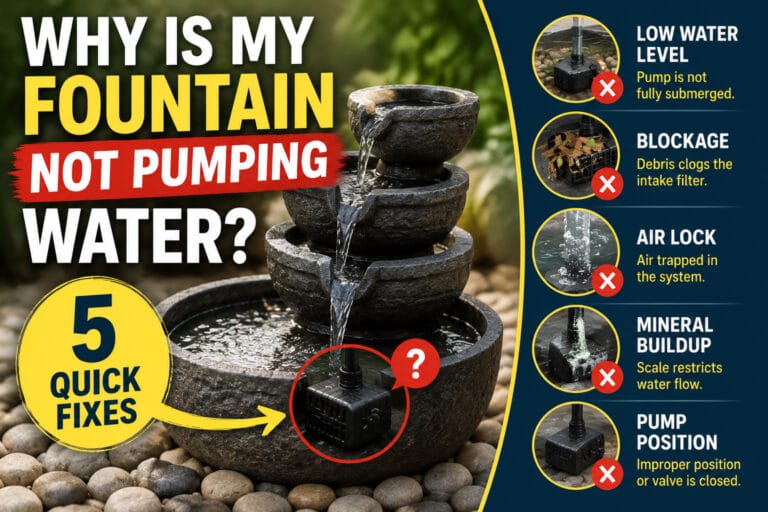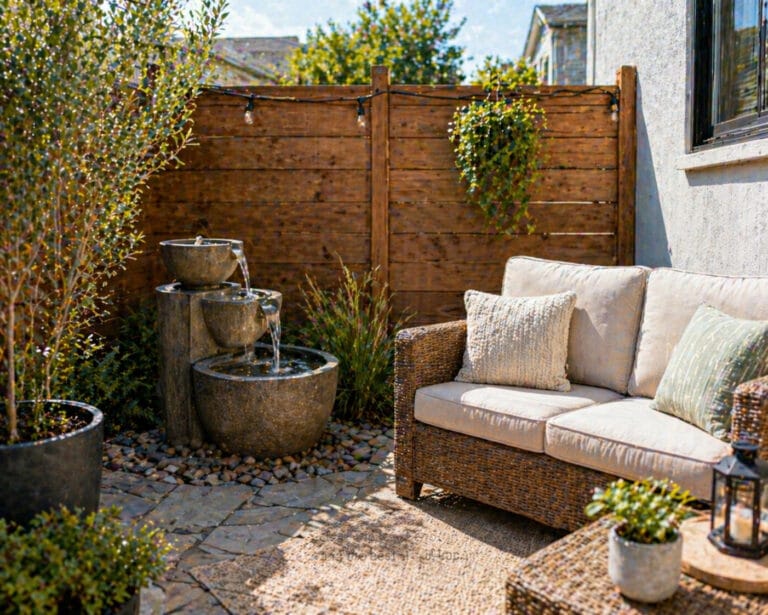

If you are planning to add a compact water fountain (10–30 inches) to your apartment balcony, suburban front porch, or cozy wooden deck, you likely have one major concern on your mind: Will this fountain be too noisy? Nobody wants a peaceful evening interrupted by the harsh, mechanical buzzing of a cheap motor, and certainly, no one wants a knock on the door from a neighbor complaining about a code violation. You want the gentle, consistent, and soothing splash of water—a natural white noise designed to mask traffic clatter and neighborhood chatter.
Table of Contents
As experts in compact water features aligning with the American Society of Landscape Architects (ASLA) guidelines, we are here to clear up the confusion: Small fountains themselves are not inherently noisy. True “noise issues” are always the byproduct of material resonance, fluctuating power, cheap pump engineering, or improper setup. According to real-world testing data from This Old House, a premium small outdoor fountain runs between 25 to 40 decibels (dB)—roughly the acoustic equivalent of a quiet library. However, a poorly engineered fountain can easily spike past 55 dB, turning a backyard oasis into a headache.
Here is the scientific breakdown of small fountain acoustics, high-frequency pitfalls to avoid, and how to tune your 10–30 inch water feature into a flawless “invisible healer.”
🔍 1. Deconstructing Fountain Acoustics: Hydroacoustic vs. Mechanical Noise
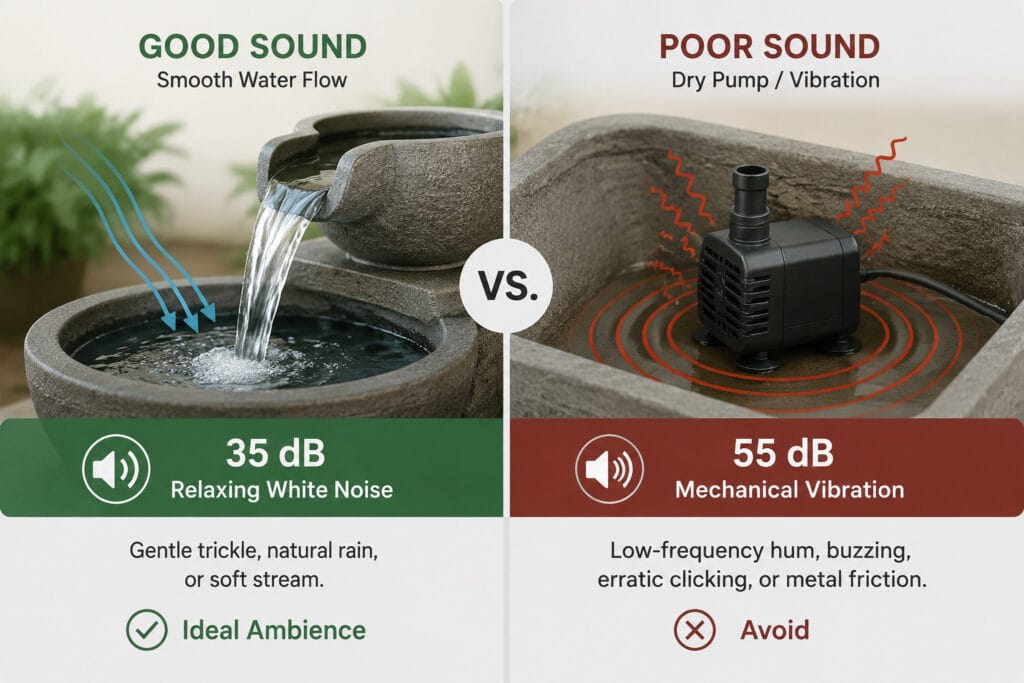
When homeowners complain that a small fountain is “too loud,” they are usually confusing two entirely different acoustic phenomena. Recognizing the difference is your first step toward choosing the right water feature:
| Sound Type | Physical Source | Typical Decibel (dB) | Human Perception | Status |
| Hydroacoustic Sound | Water cascading, dropping, or bubbling | 30–45 dB | Gentle trickle, natural rain, or soft stream. Lowers cortisol levels. | ✅ Ideal Ambience |
| Mechanical Noise | Pump vibration, rotor imbalance, air suction | 45–60+ dB | Low-frequency hum, buzzing, erratic clicking, or metal friction. | ❌ Avoid |
The Science of Acoustic Masking
According to the Acoustical Society of America (ASA) and ANSI/ASA S12.2 guidelines on noise assessment, continuous natural water sounds between 35 to 42 dB create a perfect “acoustic mask.” This precise threshold can effectively drown out 50–60 dB of urban low-frequency background noise—such as loud air conditioners, street traffic, or distant lawnmowers—without interrupting normal conversations.
However, because 10–30 inch fountains carry a smaller water volume (typically 0.5 to 5 gallons), the water itself provides very little dampening for a vibrating motor. If your pump lacks isolation engineering, the mechanical hum will easily overpower the water trickle. According to Better Homes & Gardens, pump engineering and fountain material are the single most important factors in determining noise—surpassing both the fountain’s shape and size.
⚙️ 2. The Quiet Trinity: Materials, Power Source, and Pump Engineering
Through extensive testing across North American climates and analyzing thousands of customer feedback loops on platforms like Wayfair and Amazon, three factors dictate whether a compact fountain runs whisper-quiet or drives you crazy.
Factor A: Material Science — Why Polyresin Beats Heavy Stone
For compact spaces like apartment balconies and decks, material matters immensely.
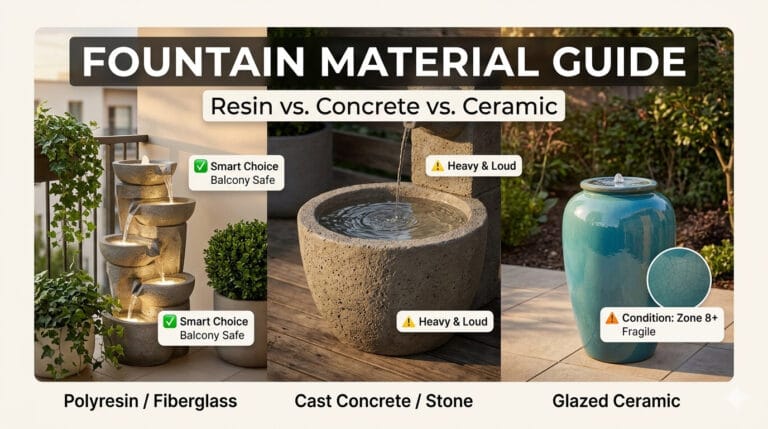
- Polyresin/Fiberglass (The Quiet King): Modern high-quality polyresin has a high internal damping coefficient. It naturally absorbs and disperses sonic vibrations rather than reflecting them. Furthermore, polyresin allows for precision-molded internal pump chambers. The pump sits snugly in a dedicated acoustic cradle, preventing it from rattling against the interior walls. Weighing only 5–25 lbs, it falls safely within standard balcony live-load limits (40–60 psf) and is incredibly easy to move.
- Concrete & Pure Stone (The Amplifiers): Heavy, rigid materials are notorious for acting as acoustic amplifiers. If a pump is not perfectly isolated, concrete and cast stone will conduct and amplify low-frequency humming right through your wooden deck or balcony tile. They are also incredibly heavy (often 35–80 lbs for small sizes), making winter relocation a logistical nightmare.
Real-World Data: Acoustic comparison tests show that the exact same pump installed in a cast stone fountain measures 8 to 12 dB louder than when installed in a molded polyresin fountain. That is nearly a twofold increase in perceived loudness to the human ear!
Factor B: Power Source — Plug-In Electric vs. Solar
Many eco-conscious homeowners look at solar fountains, but Consumer Reports highlights a major hidden noise flaw in solar water features: voltage instability.
| Comparison Feature | Plug-In Electric Pump (110V/120V) | Direct-Drive Solar Pump |
| Voltage Stability | 100% Constant Voltage | Fluctuates constantly with cloud cover and sun angle |
| Nighttime Ambience | Runs flawlessly with built-in LED lighting | ❌ Shuts off entirely unless using expensive battery backups |
| Acoustic Consistency | Smooth, predictable, uniform flow | Erratic RPM changes create sputtering, splashing, and gasping noises |
| Reliability | Safe for GFCI outdoor outlets | High pump failure rate due to erratic power surges |
The Spruce explicitly advises in its modern water feature guidelines: “If quiet operation is your top priority, choose a plug-in electric fountain. Solar pumps sputter when cloud cover shifts, and that irregular gasping sound is far more irritating than a steady mechanical hum.” Constant voltage creates a seamless, uninterrupted blanket of white noise.
Factor C: Brushless Magnetic Drive Pumps
Avoid old-school shaded-pole electromagnetic pumps that rely on mechanical carbon brushes. Over 12–18 months of outdoor exposure, those brushes wear down, causing the rotor to spin off-center, leading to intense rattling. Look for fountains equipped with Brushless Magnetic Drive (Mag-Drive) pumps. They utilize non-contact magnetic coupling, producing zero friction, running significantly cooler, and dropping motor noise by over 40%.
🎛️ 3. The “Tuning” Guide: 3 Expert Tricks to Calibrate Your Fountain’s Voice
Once your compact fountain arrives, you can use fluid dynamics and physical adjustments to calibrate its decibel level to match your setting perfectly.
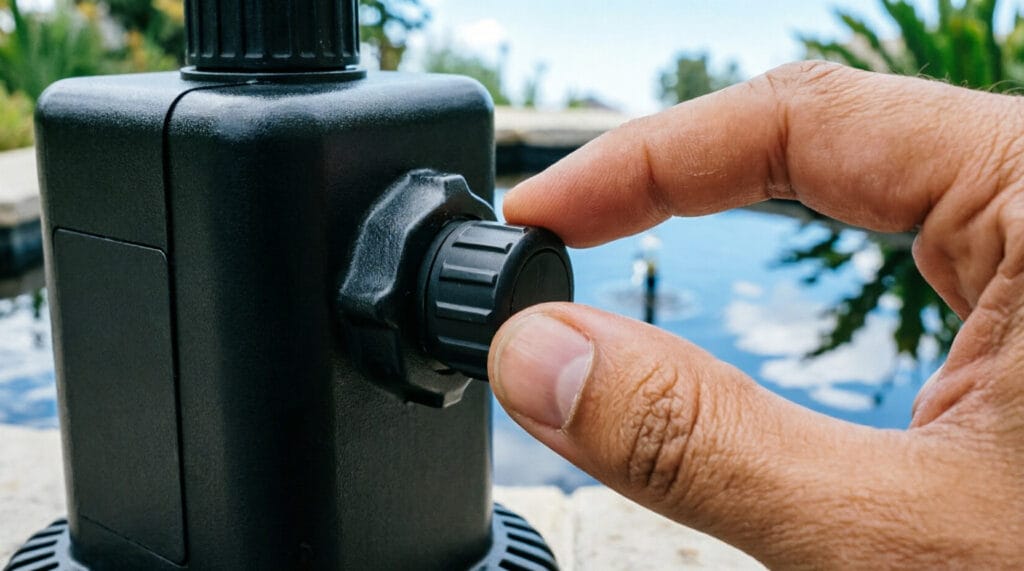
1. Adjust the Flow Control Valve (GPH Tuning)
Premium plug-in fountains include a adjustable toggle on the pump housing.
- Water splashing too loudly? Unplug the unit, lift the pump, and micro-adjust the valve toward the “minus” sign to reduce the GPH (Gallons Per Hour).
- Can’t hear the water? Increase the flow, but ensure it doesn’t cause cavitation (air pockets).
- Expert Note: The EPA WaterSense guidelines suggest an ideal flow rate of 40–120 GPH for micro-fountains to keep noise below 35 dB while maintaining visual beauty.
2. The River Stone Diffusion Trick
If the water dropping from the tiers strikes the basin floor with a sharp, hollow “slap,” use the landscape architect’s secret: place 3 to 5 smooth, natural river stones (1–3 inches in diameter) directly at the water’s impact point. The irregular, smooth surfaces break up surface tension and diffuse a single harsh stream into a multi-point, rich, and organic rustling sound—mimicking a natural forest brook.
3. Water Level Management (Defeating Cavitation Noise)
This is the #1 reason small fountains suddenly start buzzing. Because 10–30 inch fountains have small reservoirs (1–5 gallons), evaporation happens fast—especially during hot summer days in regions like California or Texas.
When the water level drops below the pump’s intake, the pump draws in air. This creates cavitation, causing a loud sucking and vibrating screech. Acoustic testing shows that a cavitating pump jumps 15–20 dB higher than normal operation, transforming a “library” into a “busy restaurant.” Keep your reservoir topped off, ensuring water sits at least 1 inch above the pump housing.
🏡 4. Code Compliance and Neighbor Etiquette
Before setting up your new feature, keep local regulations and spatial acoustics in mind to keep your neighborhood peaceful:
- Noise Ordinances & HOA Rules: Most US municipal codes and Homeowners Associations (HOAs) enforce a strict nighttime noise limit of 45 dB at the property line (and 50–53 dB during the day). A properly tuned polyresin plug-in fountain operating at 35–42 dB is completely compliant and safe from code enforcement fines (which can range from $500 to $2,500 in strict cities like New York or Los Angeles).
- Structural Anti-Vibration: If placing your fountain on a wooden deck or apartment balcony floor, place a thin rubber anti-vibration mat or outdoor silicone pad beneath the base. This completely cuts off structural acoustic transmission into the floorboards.
- Keep Clear of Reflection Surfaces: Avoid placing the fountain flush against a glass window, which causes high-frequency echoes. Pulling it 24 inches away and placing potted green shrubs (like boxwood or holly) behind it will absorb 10–15% of reflective echoes, making the stream sound incredibly natural.
💎 Summary: Peace is Engineered
A small outdoor fountain shouldn’t be a source of stress. By bypassing cheap solar options, steering clear of heavy and loud cast concrete, and opting for an engineered plug-in polyresin fountain with built-in LED lighting, you gain a reliable, whisper-quiet sanctuary. Keep the water topped off, adjust your flow valve, and enjoy your serene, private outdoor oasis.
If you are still looking for layout inspirations, check out our previous guide on Balcony Water Fountain Ideas for Small Spaces to see how to position your setup perfectly.